
 Updated : July 2, 2026
Most revenue leaders select a dialer the way they pick any other tool. Demo, feature checklist, vendor scorecard, decision.
None of these factors includes what actually matters: what happens when the platform fails in the middle of a live campaign and calls go down.
This exposes the gap between how a vendor sells and how a vendor supports.
This blog is about that gap, and why what you find inside it matters more than every feature you signed off on.
Your Outbound Campaign is Live. But Your Calls Just Stopped.
Picture a normal Wednesday on any sales floor. Twenty-five reps are in flow, the queue is loaded, and the campaign is moving. Until a carrier route quietly degrades.
Within three minutes, a dozen calls drop. Within five, the agents stop dialing. By the time someone in IT realizes the failure is on the vendor side, the team is sitting in a chat queue behind 60 other tickets.
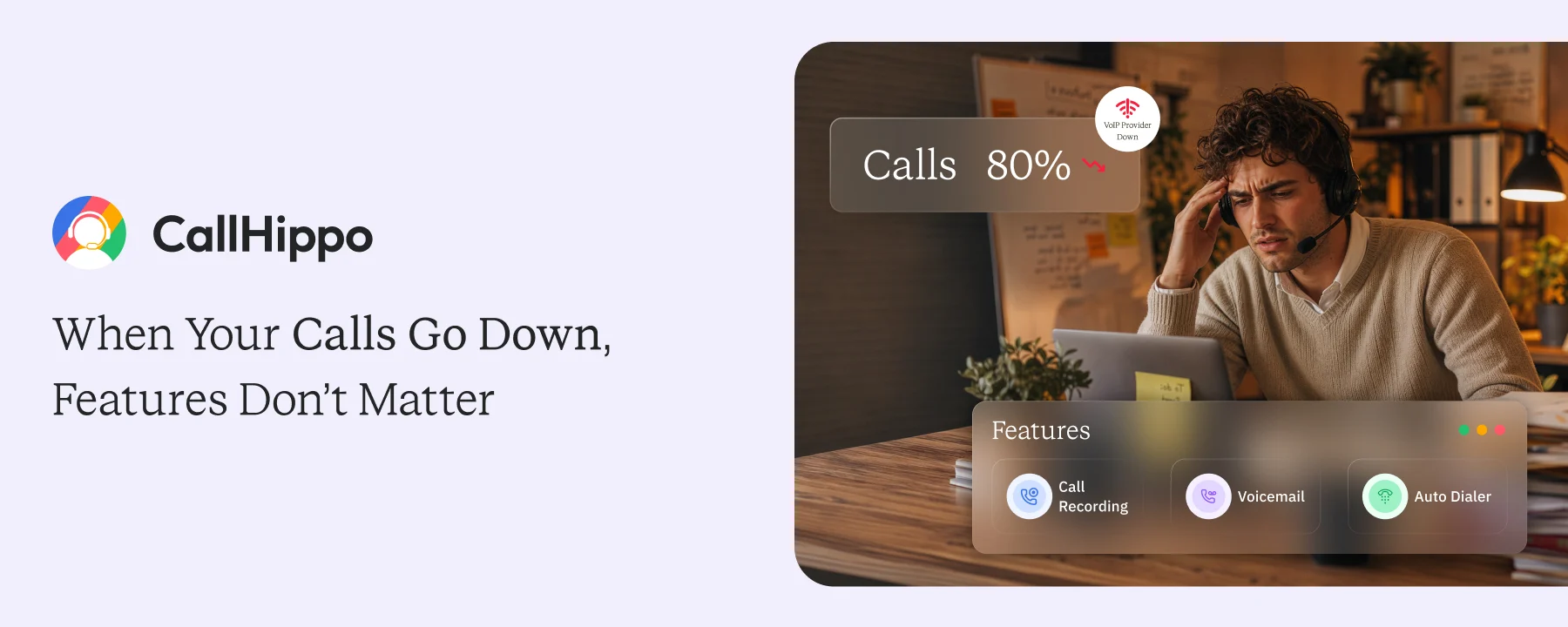
This scene plays out across dozens of sales teams every week. The platform is technically still online, the dashboard reads green, and the AI features are still running. But the conversations that drive the business have stopped, and nothing on the feature list can restart them.
We Bought What the Demo Showed, Not What the Outage Reveals
Most dialer evaluations test what the platform can do, never what happens when it breaks. Three reasons explain why.
1. The Demo Runs on the Vendor’s Best Day
Every vendor evaluation happens on the vendor’s best day. The demo runs in a controlled sandbox. Reference calls go to customers that the vendor hand-picked.
The scorecard tracks features, integrations, and pricing tiers. None of those tests addresses the question that actually decides the outcome: what happens when the platform fails.
2. The Industry Measures “What Is Easy”, Not “What Matters”
Even sharp revenue leaders sign off on tools that look perfect on paper and quietly fall apart on the day they are needed.
That is a buying-decision failure, not a product one. The industry measures what is easy to measure, and rarely what matters most.
3. Why Support Always Gets Funded Last
Vendors put their money where buyers are paying attention. Polishing the demo and shipping new features gets them shortlisted; hiring strong support staff does not.
So support stays understaffed until customers start complaining months after the contract is signed.
Features Are a Promise. Support Is What Happens When That Promise Breaks.
Every dialer is sold on its features. Few are sold on the promise behind them, which is what gets tested the moment something goes wrong.
1. What a Feature List Actually Tells You
A feature list is a promise about how the platform behaves under normal conditions. It tells you what the dialer does when nothing is wrong. That information is real, but it answers the wrong question.
2. What Support Actually Decides
Support is what happens the moment those normal conditions disappear.
- The carrier degrades.
- A regional outage hits.
- An integration silently breaks.
How the platform handles those moments is the real product your team uses. The sales pitch was selling you something else.
3. The Vendors That Closed the Gap
Most revenue leaders conflate features and support until the first real outage forces a distinction.
The vendors that survive that distinction built their support function to match the size of their promise.
The Only Variable That Moves the Outcome Is Who Picks Up
When a campaign breaks, the vendor’s response time becomes the only thing that decides what happens next.
1. Every Feature Goes Inert the Moment Calls Stop
When the dial volume stops mid-campaign, every feature on the platform becomes inert.
- The CRM sync still runs.
- The dashboard still loads.
- The AI scoring engine still waits for calls that are not happening.
None of it moves the outcome until someone, on the vendor side, gets on the line and acts.
2. The Trade-Off Most Vendors Avoid
A platform with fewer features but a human responding in three minutes is a better partner than a fully loaded product behind a ticket queue.
This is the same principle behind why high-performing outbound teams dial less not more and prioritize reliability over raw volume. CallHippo built its support function around this principle, with live human support across phone, chat, and email during US calling hours.
3. Time-to-First-Human-Response Is the Real Product
When something breaks, the only thing that saves the day is how fast the vendor picks up.
A few minutes, and the problem stays small. A few hours, and your team has already lost the day’s best calling window and the meetings that came with it. The damage goes further than missed meetings.
The outbound spam flagging revenue impact shows how a carrier failure that goes unresolved for hours can degrade number reputation in ways that outlast the original technical issue by weeks. Every feature on the sales deck stops mattering the moment that timer starts.
The Question Every Revenue Leader Should Ask Before the Next Campaign
There is one simple test that tells you exactly how good your vendor really is. Run it this week, before your next campaign breaks.
Stop judging vendors on what they show in a demo; judge them on what they do when your team needs help.
Step 1: Open a chat or send a ticket during your busiest calling hour.
Step 2: Check how long it takes a real human to respond.
Step 3: Note whether you got a bot, a template, or an actual person who can act.
This tells you more about your vendor than anything else on their pitch deck.
If a real human does not respond within ten minutes, you have a problem. Every campaign you run is one bad morning away from a quarter you cannot recover. The vendor you signed with on a normal Tuesday is rarely the same vendor you get on a bad one. Run the test this week. The answer decides whether your next campaign survives or stalls.

Published : May 4, 2026

Ankit Dudhwewala is the CEO and Co-founder of CallHippo, a leading virtual phone system designed to optimize business communication through AI and automation. With a strong background in marketing and business administration, Ankit has successfully built and bootstrapped CallHippo. Ankit’s leadership and innovative approach have made him a prominent figure in the SaaS industry, driving growth and shaping the future of business communication solutions.

Subscribe to our newsletter & never miss our latest news and promotions.
 24k+ people have already subscribed