
 Updated : September 22, 2026
Most outbound teams hit the same wall. Answer rates drop, voicemails climb, and nobody can explain why.
The team blames the script, and the leader blames the list, but the real cause is the number itself. And it is costing you measurable revenue every week.
This blog covers why it happens, how to spot it, and the fix most teams already have.
Your Answer Rate Drops Before Anyone on the Team Knows Why
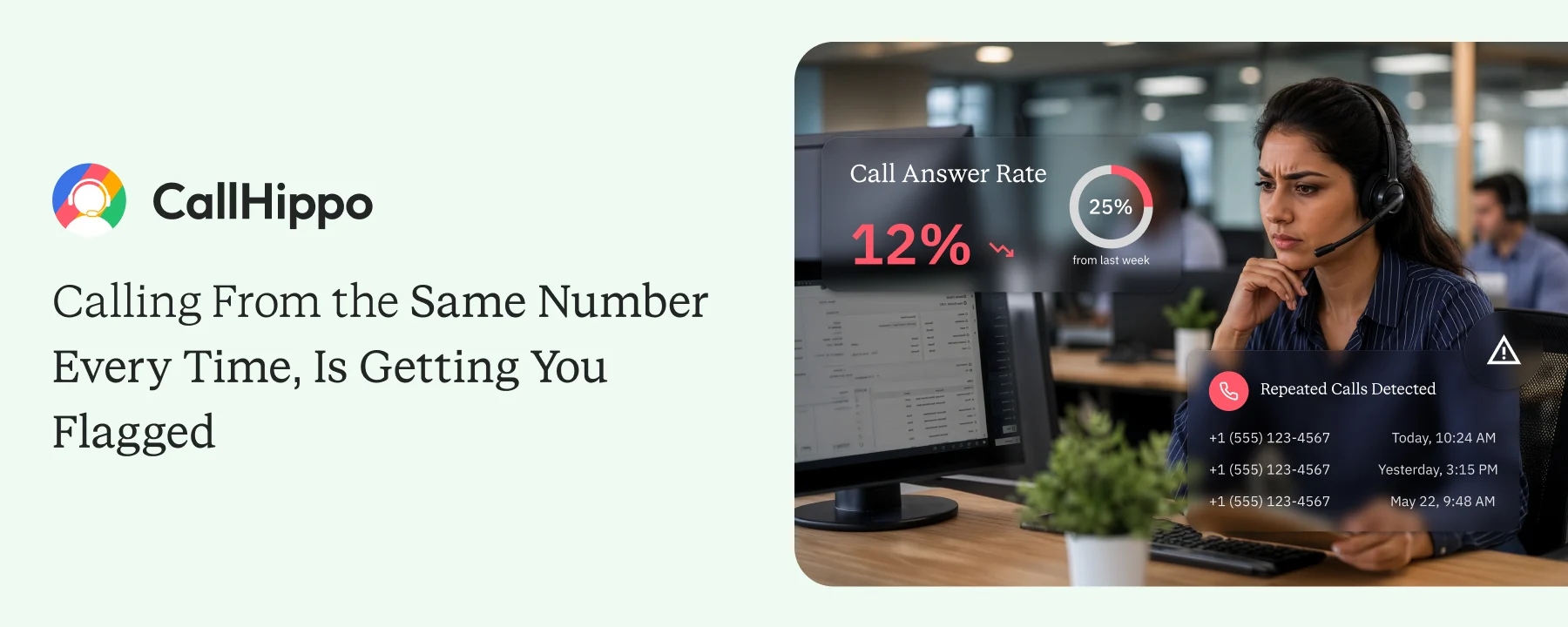
Carrier flagging is a silent problem. Your reps keep dialing, the dashboard shows the same activity, and the platform reports green. The only thing that changes is the percentage of calls that actually get picked up. By the time anyone notices, the damage has spread across weeks of the pipeline.
1. What “Spam Likely” and “Scam Risk” Labels Actually Mean
Wireless carriers and apps (Hiya, First Orion, etc.) attach these labels to your number when they decide it looks like a robocaller. Once the label appears, the prospect sees the label before answering and usually declines. Some carriers even block the call from ringing at all.
2. How Long Does It Take the Data to Show What Happened
Flagging hits a number in 48 to 72 hours, but most teams do not notice for a week. The weekly report shows volume, not the connection rate by number. By the time you spot it, the campaign is already over.
 : Outbound Spam Flagging is a Revenue Problem, Not a Telecom Problem
What Actually Triggers the Spam Flag?
Carriers do not flag numbers based on script content. They flag based on behavior patterns that look automated.
1. How Carriers Decide Which Numbers to Flag
Carriers watch three signals: call volume, answer rate, and complaint rate. When all three move the wrong way at once, your number gets tagged as suspicious. The label spreads fast across the entire carrier network from there.
2. How Many Calls From One Number Is Too Many
There is no fixed threshold, but the pattern is clear. A single number making 100+ unique-recipient calls a day starts triggering flags.
3. Why One User Complaint Can Accelerate the Damage
A single spam report from a recipient tells the carrier your number is unwanted. That signal carries serious weight in modern carrier algorithms. Three or four complaints in a week can take a healthy number straight to flagged status.
- Auto Rotate distributes outbound calls across multiple verified numbers automatically, so no single number ever crosses the volume threshold that triggers carrier flagging.
Most Teams Already Have the Fix, it is Just Not Turned On
The frustrating part of carrier flagging is that the solution is usually already inside the dialer. Most modern platforms support caller ID rotation, but teams either do not know it exists or never enable it.
1. Auto Caller ID Rotation: What It Does and How to Enable It
Auto Rotate cycles through a pool of business numbers automatically, spreading volume across numbers keeps any one number from carrying an unrepresentative share of your outbound calls.
2. Local Presence Dialing and Why It Cuts Flag Risk at the Area Code Level
Local presence shows prospects a number from their own area code. It does two things at once.
- It lifts answer rates because the call looks local.
- It also spreads calling volume across dozens of area codes instead of concentrating it on one.
That distribution is exactly what carriers reward.
3. Running Rotation Without Breaking Active CRM Sequences
Many teams worry that rotation will scramble their CRM history. Modern platforms solve this by linking every rotated call back to the right contact record. Your CRM stays clean, and the rotation runs silently in the background.
- Teams can run a full rotation strategy without manual setup, broken records, or any change to the way reps already work.
How to Know Whether Your Numbers Are Already Flagged
Most teams diagnose this problem by guessing. But knowing the actual data is crucial and is easy to pull as well, if you know where to look.
1. Answer Rate Benchmarks That Signal a Flagging Problem
A healthy B2B outbound number sits at a 15 to 25% daily answer rate. If yours falls below 8% for three days straight, flagging is the likely cause. A 10-point weekly drop almost always means reputation damage.
2. Carrier Lookup Tools and How to Use Them
Free tools like Hiya, TNS Call Guardian, and Truecaller check if your number is flagged as spam, scam, or telemarketer. Evaluate your number every two weeks, as flag status changes fast.
3. What to Do With a Number That Is Already Marked
If your number is flagged, retire it immediately. File a remediation request with the carrier intelligence service through their free portal. Swap in a warmed-up number from your reserve pool while the flagged one cools off.
| Signal You See | Most Likely Cause |
|---|---|
Mid-market teams often fix the script when the real problem is the number. Run the table check first, before assuming the reps are at fault.
Your Rotation Strategy Still Has Compliance Rules to Follow
Auto Rotate buys you reach, but compliance keeps you in the game. Three rules shape your number’s reputation as much as call volume does.
1. What STIR/SHAKEN Attestation Means for Your Outbound Numbers
STIR/SHAKEN is how US carriers verify a calling number is legitimate. “A-level” attestation passes through cleanly. “C-level” often gets flagged on the spot. Always choose a dialer provider that gives you an A-level by default.
2. How Calling Hours and DNC Lists Add to Your Flag Risk
Calling outside permitted hours or dialing DNC-listed numbers spikes your complaint rate fast. Every complaint feeds the flagging algorithm. Respect calling hours and scrub DNC lists. It is reputation protection, not just compliance.
3. Why Low-Quality VoIP Routing Damages Number Reputation Faster
Cheap VoIP routes bounce calls through multiple carriers, creating dropped connections and poor audio quality. Carriers read those drops as red flags. A premium provider with direct carrier relationships keeps your reputation clean.
: Working in a Call Center: Everything You Need To KnowHow to Build a Number Health Strategy for a Growing Team
A small team can wing it, but a growing team cannot. Number health needs a system that scales with your call volume.
1. How Many Numbers Does Your SDR Team Actually Need
A simple rule: one outbound number per 25 to 30 dials per day. A 10-rep SDR team running 100 dials each needs a pool of 30 to 40 numbers in active rotation, not one or two shared lines.
2. Warming Up New Numbers Before They Go Into Rotation
A brand-new number should make 10 to 20 calls per day for the first week, mostly to existing customers or warm leads. Sudden high volume on a fresh number triggers flagging fast. A gradual warm-up builds carrier trust.
3. Tracking Per-Number Performance Across Your Team
Track three things: answer rate per number, complaint count per number, and pipeline contribution per number. A dashboard showing these three columns turns number health from guesswork into a measurable workflow.
Conclusion
Number reputation is no longer a side concern; it decides whether your campaigns ship or stall. Spot the flag early, rotate before the threshold hits, and stay on top of compliance. CallHippo’s Auto Rotate handles the rotation automatically, so your numbers stay healthy and your pipeline keeps moving forward.

Frequently Asked Questions
1. How many calls from the same number before it gets flagged?
There is no universal threshold, but most carriers start flagging numbers that exceed 100 unique recipients per day with low answer rates.
2. Can a flagged number be unflagged?
Yes, but it takes work. Submit a remediation request to Hiya, First Orion, and TNS through their free portals. Retire the number from active calling for 2-4 weeks while the flag clears.
3. Does local presence dialing prevent spam labels?
It reduces the risk significantly because volume gets spread across many area codes instead of being concentrated on one. Local presence is one half of the fix, auto-rotate is the other half.
4. What is STIR/SHAKEN, and do I need to worry about it?
STIR/SHAKEN is the framework US carriers use to verify calling numbers. Numbers with “A-level” attestation rarely get flagged automatically. Make sure your dialer provider supports it.
5. How does caller ID rotation affect CRM call logging?
Modern dialers keep CRM logging intact even when rotating numbers. Every call still attaches to the right contact record. The rotation happens in the background without breaking the timeline.
Published : May 22, 2026

Uzma is an SDR Leader at CallHippo with a proven track record in global sales and lead generation. She works closely with sales and support teams to bridge the gap between conversations and revenue by optimizing outreach, improving connect rates, and streamlining communication workflows. Her expertise lies in building scalable calling strategies that drive consistent pipeline growth.

Subscribe to our newsletter & never miss our latest news and promotions.
 24k+ people have already subscribed