
 Updated : July 8, 2026
Your rep is 55 minutes into a contract discussion. The buyer is asking final pricing questions. The call cuts off.
The rep dials back, but the buyer picks up cold; the momentum is gone.
This is not a network glitch. Every VoIP phone system has a built-in call duration limit.
Most teams find out only when it costs them a deal.
Why VoIP Calls Don’t Last Forever
Every VoIP platform enforces a maximum call length. It is a design choice, not a defect.
1. Every VoIP System Has a Built-In Call Duration Ceiling
Every cloud calling platform caps how long a single call can last. RingCentral, Zoom Phone, Vonage, and even legacy providers all enforce a limit. The number varies by vendor. Most teams never read the plan fine print where the limit lives.
2. Why Carriers and Platforms Set These Limits in the First Place
The limit exists for three reasons.
- It stops stuck calls from running for hours and burning minutes.
- It protects network resources so one call cannot hog a channel.
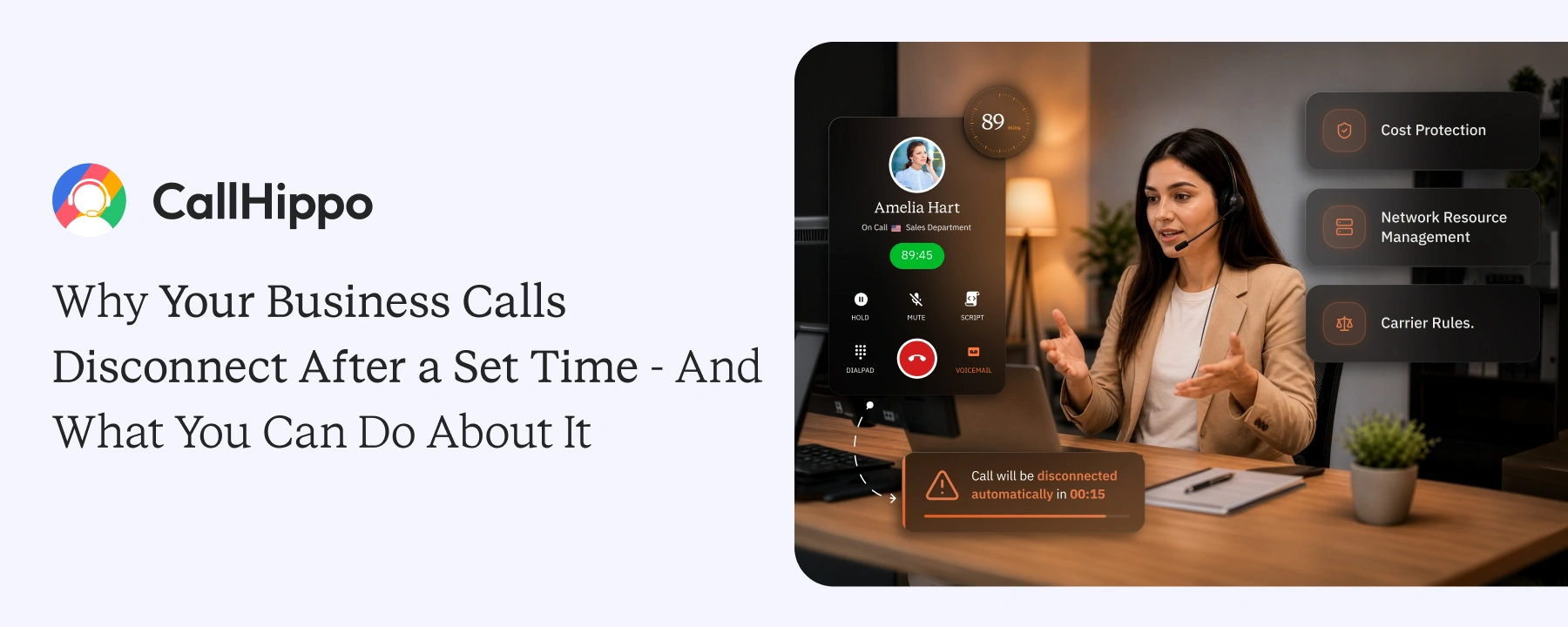
- Carrier rules require automatic disconnection after certain thresholds.
3. What the Default Limit Looks Like Across Common Phone Systems
Most paid VoIP plans set the default between 60 and 180 minutes. Some providers hard-code the number and never expose it. A few show it deep in the admin panel. The default rarely matches how your team actually uses the line.
The Problem Is Not the Limit: It’s That Nobody Knows About It
A hard limit is manageable when everyone sees it coming. The real damage happens when the disconnect arrives without warning.
1. Agents Don’t Know When the Call Will Drop
Nothing in the agent’s dashboard shows the call is about to end. No countdown, no color change, no alert. The rep keeps talking. The customer keeps buying. Then the line goes dead. That silence is where the deal gets lost.
2. What a Mid-Call Disconnection Looks Like to the Customer
To the customer, it feels like the rep hung up. They wait a beat, check their phone, and see the call ended. Even if the rep calls back in seconds, trust takes a hit. The customer starts wondering how professional this business really is.
3. The Difference Between a Planned Wrap-Up and an Abrupt Cut-Off
A planned close ends with a summary and next steps. An abrupt cut-off ends mid-sentence, mid-question, or mid-agreement. The first builds a customer relationship. The second builds a complaint ticket. The difference is whether the agent controls the ending or the timer does.
What Unexpected Call Disconnections Cost the Business
The cost of a dropped call rarely shows up on the invoice. It hides inside your pipeline, your churn numbers, and your team’s morale.
1. Sales Calls Cut Off During Negotiation or Closing
A drop during discovery is recoverable, but a drop during negotiation is not. A drop right when the buyer says yes destroys the emotional peak. Getting the buyer back to that state on a callback rarely works. The deal often stalls or dies entirely.
2. Support Calls That End Before the Issue Is Resolved
Support agents work through a problem step by step. When the call drops mid-fix, the customer re-explains everything from scratch. Half the resolution time gets wasted. Your first-call-resolution number just took a hit. The drop shows up in call analytics next week.
3. The Repeat Call Cost: When Customers Have to Call Back
Every dropped call becomes a callback. Callbacks eat agent capacity that should be handling new inquiries. Wait times climb, agent throughput drops, and the cost per resolved case goes up. One preventable drop can trigger three follow-on interactions before the case closes.
4. Agent Frustration and the Perception of an Unreliable Phone System
Agents lose trust in the tools they use every day. They start blaming their headset, the internet, or the vendor. Confidence drops. Some avoid long calls entirely. The team ends up treating a normal setting like a broken feature.
 : Call Volume is Not a Productivity Metric. It Never Was
Why Hard-Coded Limits Don’t Fit Every Team
A 60-minute cap fits an SDR team but breaks enterprise onboarding calls. The right limit depends on the call type.
1. Outbound SDR Teams vs. Enterprise Account Management: Different Call Lengths
An SDR making 80 dials averages under 5 minutes per connect. A 60-minute cap is invisible to them. An enterprise AE running a demo needs 45 to 75 minutes. The same limit that helps one team fails the other.
2. When 60 Minutes Isn’t Enough and When It’s Too Long
Onboarding, contract negotiation, and technical support calls often run past 60 minutes. Cold prospecting calls rarely reach 10 minutes. One shared limit fails both use cases at once. Neither team gets what they actually need from the phone system.
3. The Cost of Not Being Able to Set Your Own Limit
Without control over the setting, you build workarounds. Reps schedule callbacks to reset the timer. Managers coach around a limit nobody asked for. Sales call reporting shows shorter calls than the actual conversation length. All of this drains time that should be selling.
How a Configurable Maximum Call Duration Solves This
The fix is not more time. The fix is control. Give managers the setting, and the disconnect stops being a surprise.
1. What a Maximum Call Duration Setting Does
A maximum call duration setting is one field in your admin panel. You choose the ceiling. Calls end automatically at that ceiling, every time. Everyone on the team knows what to plan around. No call ends without warning again.
2. How CallHippo’s 90-Minute Limit Works
CallHippo lets managers set the maximum call duration up to 90 minutes. The setting applies at the account or campaign level. When the timer hits the limit, the call auto-disconnects. Set it once inside the VoIP phone system admin panel, then track live sessions with call monitoring.
3. Why Auto-Disconnect at a Known Limit Is Better Than a Random Drop
A random drop leaves both parties confused. A known auto-disconnect gives the agent a clear runway. The agent starts wrapping at the 80-minute mark and confirms next steps. The customer ends the call with a plan, not a dropped signal.
Conclusion
Call duration limits are not going away, but invisible limits should. The moment you can see and control the limit, deals stop dying. It becomes a boundary your team plans around. Not a trap that catches them at the worst moment.

Frequently Asked Questions
1. Why does my VoIP call automatically disconnect after a set time?
Every VoIP platform enforces a maximum call duration to protect network resources and control costs. When the timer hits the limit, the call ends automatically.
2. What is the maximum call duration on CallHippo?
Up to 90 minutes per call, and configurable to any shorter value at the admin level.
3. Can I set different call duration limits for different teams or campaigns?
No. CallHippo enforces a fixed 90-minute call duration cap that applies across all accounts and campaigns. The limit is not customizable per team, campaign, or use case.
4. What happens to the call recording when a call hits the duration limit?
The recording stops when the call auto-disconnects. Everything up to that point saves to your call analytics dashboard, and the file is available for review.
5. Does CallHippo warn agents before the call is about to be disconnected?
Because the limit is set and known in advance, agents can plan around it. Also, the call duration is visible through the dialer, so the reps are well aware of the time.
6. How do I find out what call duration limit my current phone system has set?
Every VoIP system sets its own call duration limit. The process to find it differs across providers. Check your admin panel, plan documentation, or support team. CallHippo’s auto-disconnect limit is fixed at 90 minutes.
Published : July 8, 2026

Shantanu Thakur is a Product Consultant at CallHippo with expertise in B2B software sales. With a background in sales development, he brings strong skills in client prospecting, negotiation, and business growth to help companies find the right solutions for their needs.

Subscribe to our newsletter & never miss our latest news and promotions.
 24k+ people have already subscribed