
 Updated : August 26, 2026
Most teams track one connect rate for the whole floor. That single number hides a costly truth.
Some of your business phone numbers are quietly failing, and nobody notices.
This blog shows how to find the weak numbers fast. Then you fix the leak before it drains more revenue.
Why Does Your Connect Rate Look Fine When One Number isn’t Working?
Your overall connect rate is an average, and averages lie. A few strong numbers can mask one that barely connects. So the dashboard looks healthy while a real problem hides inside it.
1. Team Averages Hide Which Number is Failing
One blended number tells you nothing about individual lines. A dead number and a great number can average out fine. You never see the failure until you split them apart.
2. One Region Not Converting is a Warning Sign
When a whole region stops converting, do not blame the reps. The number itself may be the problem. A silent line in one market is an early warning worth chasing.
 : You’re Measuring the Wrong Thing in Outbound Sales Calling
Why Do Some Business Phone Numbers Get Answered and Others Don’t?
Not every number gets the same welcome on a screen. A few clear factors decide who picks up.
1. Foreign or Unrecognized Caller ID
People rarely answer a number they do not recognize. A foreign or odd caller ID reads as a risk. That hesitation alone sends your call straight to voicemail.
2. Spam Labeling From Carriers
Carriers flag numbers that dial too much, too fast. Once labeled spam, your calls show a warning or get blocked. Even a perfect number dies once carriers mark it.
3. One Number Spread Across Too Many Regions or Campaigns
Using one number everywhere overloads and exposes it. It looks out of place in half your markets. Spread too thin, that single line underperforms in every one.
What Does a Failing Phone Number Actually Cost Your Business?
A weak number does not just lower a metric, but it also quietly bleeds real revenue every week.
1. A Missed Call Never Gets Counted as a Lost Lead
An unanswered call leaves no trace in your pipeline. You cannot miss what you never saw arrive. So the loss stays invisible while the revenue quietly disappears.
2. Calling Multiple Countries Makes This Worse
Every new country adds another number to watch. One weak line per market multiplies fast across borders. Soon, a large slice of your outreach never connects at all.
: How to Build a Sales Call Cadence That Books Meetings (With Call and SMS Templates)How Do You Check the Answer Rate for Each Phone Number?
Finding the weak number is simpler than most leaders expect. It starts with the right view of your data.
1. Look at Answer Rate by Number, Not by Team
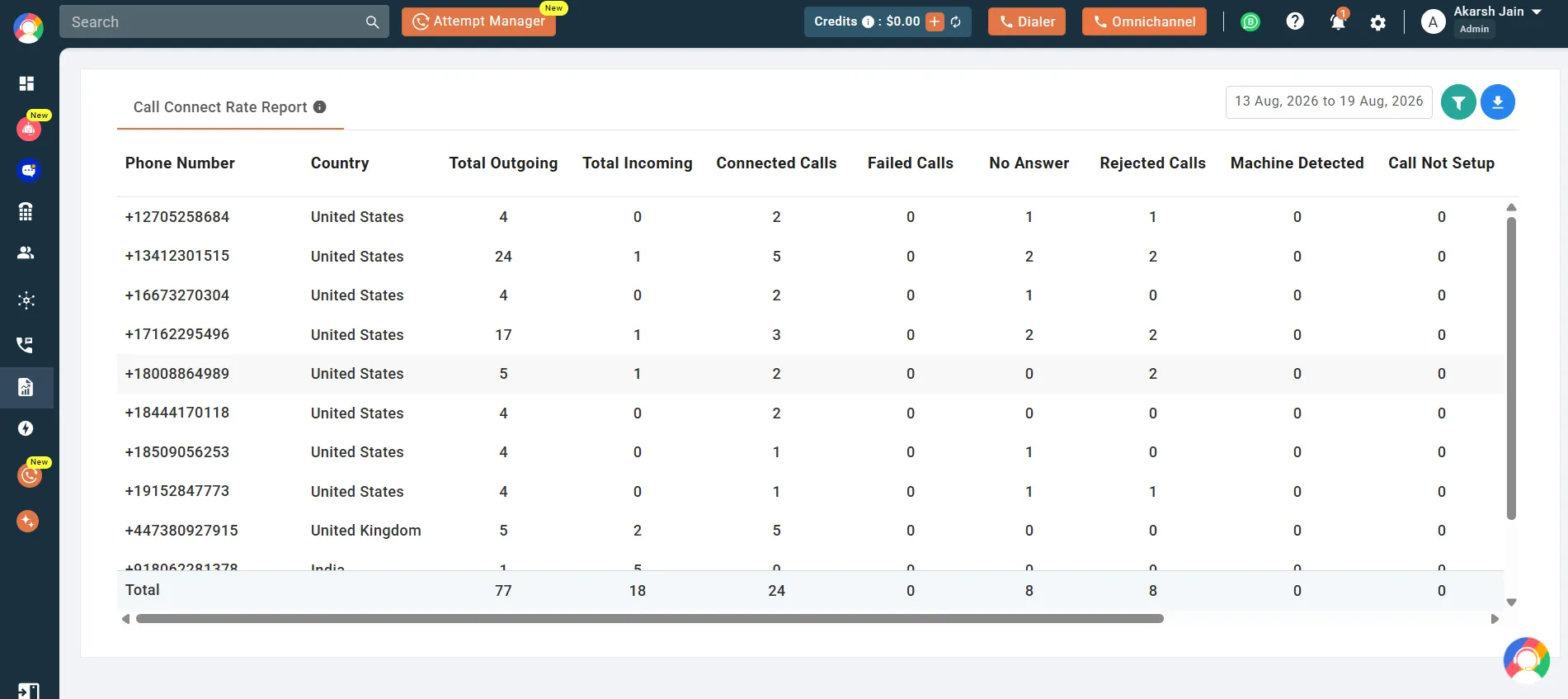
Stop looking at one blended team figure. Pull the answer rate for each individual number instead. CallHippo’s Call Connect Rate Report breaks this down for you automatically.
With CallHippo, you can track the total number of calls (outgoing and incoming), connected calls, unanswered calls, rejected calls, and much more. You can also download the report easily.
2. Break Down the Data by Country
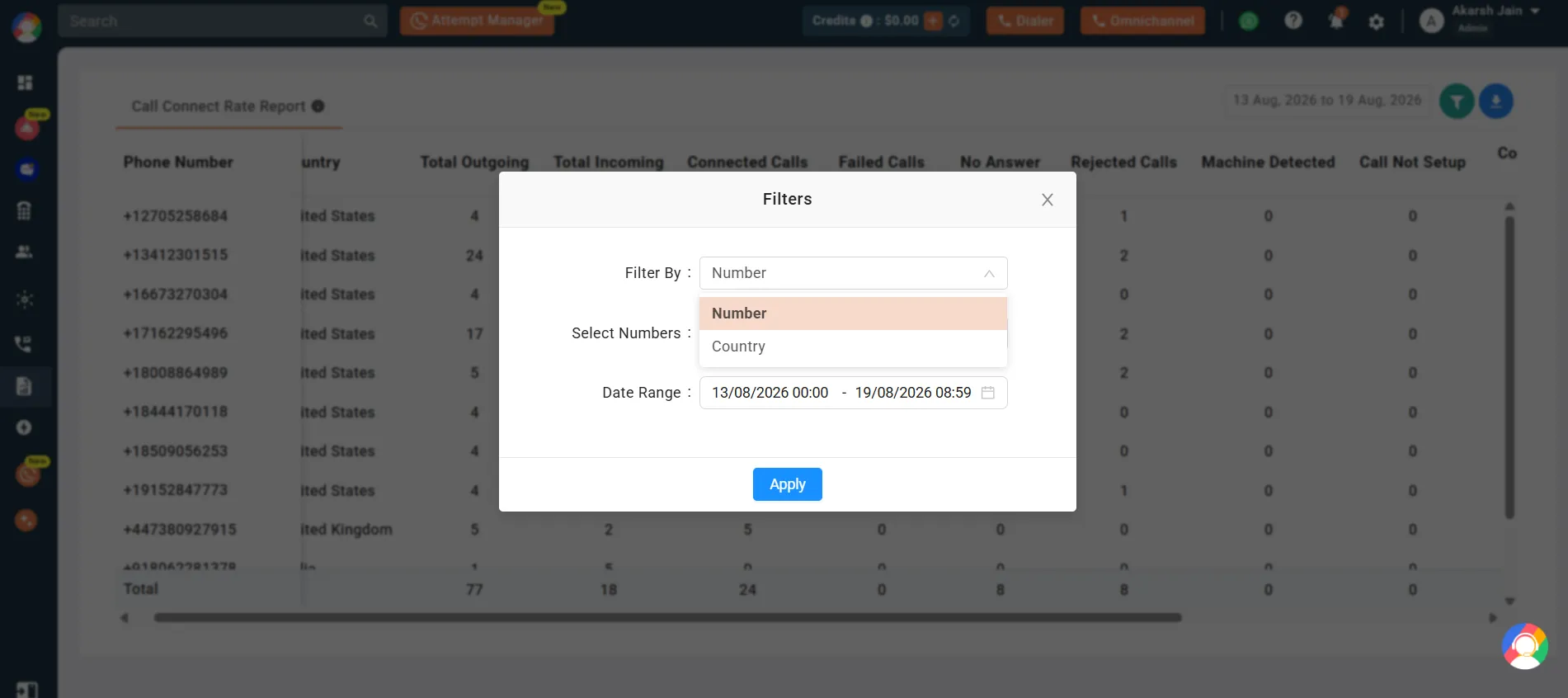
CallHippo also allows you to group your numbers by the country they serve. Compare answer rates market by market, side by side. The weak spots jump out the moment you split them.
3. Set a Baseline to Spot Underperforming Numbers
Decide what a healthy answer rate looks like. Any number that falls well below it needs attention. A clear baseline turns a vague hunch into a firm decision.
How Do You Monitor Your Phone Numbers to Catch Problems Early?
Checking once is not enough to stay ahead. Good monitoring catches a slipping number before it costs you.
1. Set Up Analytics to Track Each Number
Put every number on a live analytics dashboard. Watch answer rates and let answering machine detection flag machine pickups. You see trouble building long before it hurts revenue.
2. Replace Low-Performing Numbers With Local Ones
When a number keeps failing, swap it fast. A local number in that market lifts pickup rates quickly. Prospects trust a familiar code and answer far more often.
3. Wait Two Weeks Before Checking Results
Give a new number time to settle in. Two weeks of data beats a single noisy day. Judge the change on a real trend, not one call.
Conclusion
Your average connect rate was never the full story. Hidden inside it, one number may be quietly failing. Check each line on its own, and the weak spots appear. Fix them with local numbers and steady monitoring. Small moves like these protect real revenue every single quarter.

Frequently Asked Questions
1. How do I know if my business phone number is being blocked or flagged as spam?
Watch for a sudden drop in answer rates. Check your number against spam-label databases too. A carrier warning on your caller ID is the clearest sign.
2. What’s a good answer rate for outbound business calls?
It varies by industry, market, and call list quality. Many outbound teams aim for a healthy double-digit rate. The key is beating your own baseline, not a generic number.
3. Does a local area code actually improve pickup rates?
Yes, and the effect is usually significant. People trust and answer a familiar local number far more. A local code often lifts pickup rates noticeably.
4. How often should I check my phone numbers’ answer rates?
Check them at least once every two weeks. Review more often when you launch a new market. Regular checks catch a failing number before it costs much.
5. What’s the difference between call connect rate and answer rate?
Connect rate measures calls that reach the network successfully. Answer rate measures how often a real person actually picks up. Answer rate tells you far more about real engagement.
Published : August 21, 2026

Satyaki is an SDR Lead at CallHippo with over three years of experience in B2B and B2C SaaS sales, specializing in lead generation, pipeline management, and international markets. Passionate about building meaningful connections, he brings a strategic yet people-first approach to driving business growth.

Subscribe to our newsletter & never miss our latest news and promotions.
 24k+ people have already subscribed