
 Updated : May 5, 2026
Does it ever feel like your call center is busy all day, yet you still don’t know what’s actually working?
I’ve seen teams answer calls nonstop and chase reports. And still miss out on leads or end up frustrating customers.
The problem isn’t effort. It’s the system that is lagging behind.
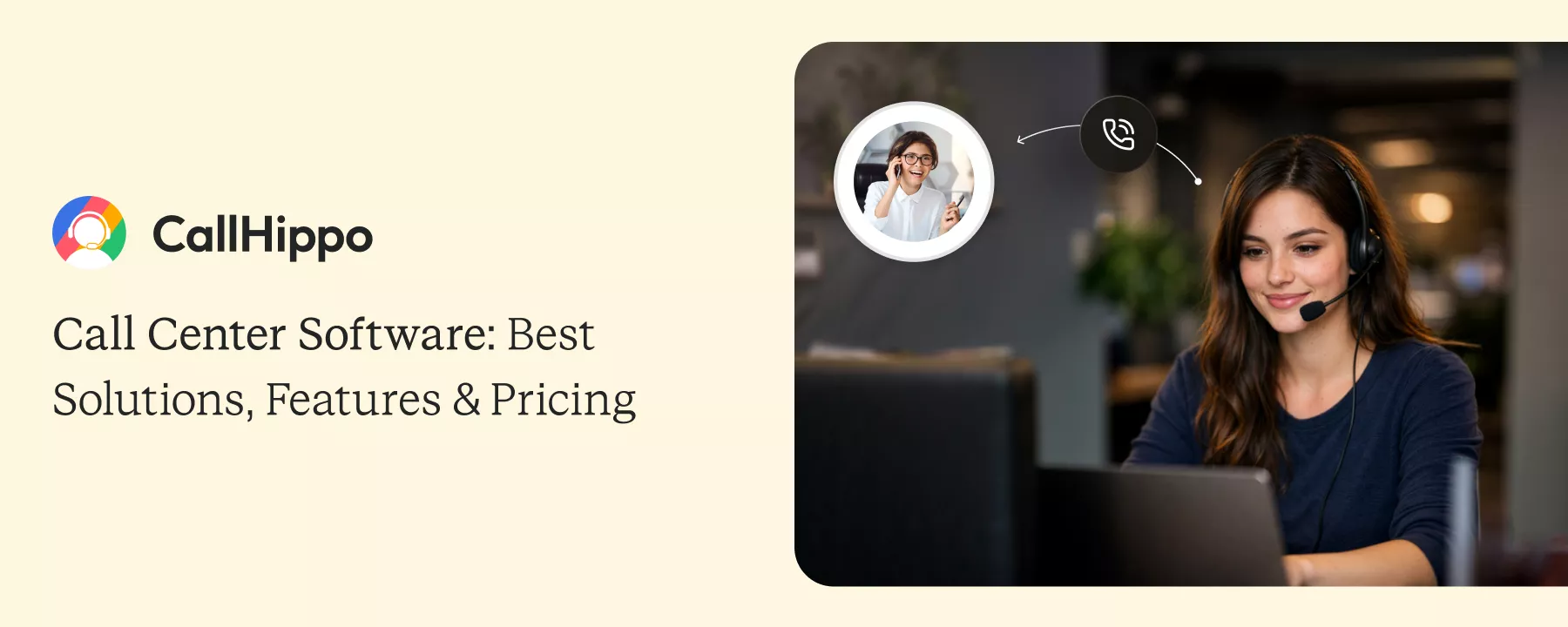
In 2026, it all depends on the call center software. From the smooth teamwork to how clearly managers can track performance, everything depends on the software you use.
This guide explores the best call center software providers, core features, how to choose the best software, and much more.
What is Call Center Software?
Call center software is a cloud-based system that assists businesses in managing all calls from one platform. It helps agents to automate workflows and boost the resolution process. Call center software also helps agents to deliver a better customer experience. Most call center software even includes:
- 24/7 self-service with smart call escalation
- Call recording and performance analytics
- Better visibility into agent productivity
Overall, call center software makes it easy for teams to deliver faster and more personalized support. This automates routine tasks and allows teams to offer great customer service and build customer loyalty.
- According to a survey, 71% of Gen Z respondents prefer live calling over any other form of communication to reach out to customer care.
Types of Call Center Software
Each call is built to cater to some specific business requirements. One type of software supports incoming calls. While another can be used for outbound calls. Businesses can even use a hybrid call center software. Here are a few types of call center software.
1. Inbound Call Center Software
Inbound call center software allows businesses to handle incoming customer calls. It even helps teams to manage support requests/queries more efficiently. Call routing, IVR, call queues, etc., features ensure customers connect with the right agent quickly.
2. Outbound Call Center Software
Outbound call center software assists teams in managing large outgoing calls. It is commonly used for sales and follow-ups. Features like auto dialers, call monitoring, etc., help agents stay productive and consistent.
3. Hybrid Call Center Software
Hybrid call center software combines both inbound and outbound calling. Along with managing customer support teams can also make sales/follow-up calls. This setup is preferred by businesses that manage multiple forms of communication.
4. On-premise Call Center Software
On-premise call center software runs on local servers within the business. It gives businesses more control over their data. However, it requires higher upfront costs, ongoing maintenance, and dedicated IT support.
5. Cloud-hosted Call Center Software
Cloud-hosted call center platforms run on the internet. It does not need any physical hardware. Teams can access it from anywhere. This type of setup is also referred to as virtual call center software, as it enables businesses to run a fully functional call center without any on-site equipment or dedicated office space. This makes cloud-hosted software a great option for remote teams. Cloud-hosted call center software can even update automatically.
Key Benefits of Using Call Center Software
From effortless teamwork to improved customer interactions, the benefits of call center software are endless. Let’s explore how contact center platforms make a real difference.
1. Collaborate with Ease
CallHippo makes internal collaboration simple and natural. Customer service agents can leave notes, share call context, etc., without losing details. Everyone stays on the same page, even across shifts/teams. This reduces confusion and repeat questions. With CallHippo, collaboration happens inside the call flow, not across scattered tools.
- A customer calls back. He/she wants to know about an unresolved query. A new agent is assigned to that query. The new agent sees the internal note attached to the thread by the previous agent. The new agent understands the issues without even asking the customer to repeat.
2. Improve Agent Productivity
Productivity improves when agents spend more time having conversations with the customer and not dialing them. CallHippo’s power dialer automates outbound calling and removes the requirement to dial each number manually. This way, agents can,
- Connect faster
- Handle more calls
- Work productively
Managers also get visibility into each agent and the team’s performance. This simplifies to coach and improve results.
- When running a sales campaign, it is crucial for agents to work productively. In order to do so, they can use CallHippo’s power dialer. Agents no longer have to manually dial calls; they connect automatically one after another. The agent can focus on interacting with customers and making sales.
3. Personalize at Every Touchpoint
CallHippo’s contextual handover feature shows full customer history during every interaction. This helps agents know past issues/preferences and conversations even before the conversations begin. Contextual handover helps agents to respond more confidently. Also, it lets the customers feel heard, not transferred.
- A customer starts interacting on chat instead of a call. With contextual handover, the agent already knows the issue they had discussed earlier on chat. This helps the agent to carry on the conversation with ease. CallHippo’s contextual handover reduces frustration for customers.
4. Increase Customer Retention
With CallHippo’s sentiment analysis and personalized communication features, teams can understand how customers feel during calls. Also, it assists agents in making real-time adjustments in their approach. Better conversations lead to stronger trust, and stronger trust keeps customers coming back.
- With CallHippo’s sentiment analysis, agents can analyze the customer’s frustration. The agent can adjust and slow down. This shows empathy. The customer ends the call satisfied. This improves customer retention and builds long-term loyalty.
Key Features of Call Center Solution
A call center software plays a crucial role in simplifying the routine call center operations to deliver better results. Here are the vital call center features that help call centers a lot.
1. Automatic Call Distribution
CallHippo’s ACD system finds the most suitable agent based on availability or rules you set and routes the calls to them. It makes sure no calls are assigned randomly. This reduces wait time. It also makes sure that no agent sits idle or is overloaded with calls.
- A customer calls.
- CallHippo checks agent availability.
- Calls get routed based on priority or workload.
- The right agent receives the call.
- Fewer missed calls and faster resolutions
2. Call Recording & Monitoring
CallHippo’s call center monitoring software records calls automatically to help teams learn from real customer interactions. Managers can monitor live calls. They can even review past interactions to spot gaps. This helps them to analyze areas to coach agents.
Agents also become more confident knowing they can revisit calls and improve. This results in better consistency and professional conversations.
 : Leading Call Center Software for Healthcare
3. Interactive Voice Response
With CallHippo’s IVR, customers can use IVR to guide themselves to the right agent or department from the start. IVR works as a basic self-service option, even outside working hours.
- The customers call and hear a recorded menu
- They choose options using a keypad or voice
- IVR identifies the choice
- Simple queries get self-served
- Complex issues reach the right agent
4. AI-Powered Call Insights
CallHippo AI-powered call insights analyze conversations, detect sentiment, and create quick call summaries. Managers don’t need to listen to every call to understand what’s happening. With CallHippo’s AI-powered call insights, teams can fix issues faster. They can even deliver better customer experiences.
5. Omnichannel Communication
CallHippo brings voice, chat, email, etc., conversations into one place. Agents get full customer context before responding. This helps them avoid confusion. This unified approach helps teams respond faster across channels.
- Customers reach out (via social media, email, etc.)
- All interactions sync into one inbox
- Agents see full context
- No repeated questions
- Faster resolution
6. Workforce Management and Scheduling Tools
CallHippo’s AI Voice Agent handles repetitive or basic calls. This ensures customers get quick responses. For example, if a customer needs to book an appointment, the AI voice agent can book it and notify the customer regarding the appointment details. This way, agents can stay focused on much more crucial and meaningful conversations. It’s a smarter way to stay available without burning out your team.
: What is Schedule Adherence?Top Call Center Software Providers in 2026
There are a lot of call center software out in the market. However, narrowing down which one suits your call center is crucial. Let’s explore the best call center software providers in 2026.
| Software Provider | Feature | Trial Info | Price | |
|---|---|---|---|---|
| 1 |  Five9 | IVA, IVR, Live Chat, Workforce Engagement Management, Analytics and Reporting | NA | Digital: $119 monthly/seat |
| 2 |  CallHippo | Call Management, CRM Integrations, Call Recordings, Workforce Management Tools, Auto Attendant, Voicemail, AI Voice Agent, Omnichannel Inbox | 10-day Free Trial | Basic: $1 per user/month |
| 3 |  RingCentral | Outbound Dialing, Conversational Intelligence, IVA, Interaction Analytics | 14-day Free Trial | Core: $20 per user/month |
| 4 |  Dialpad | Call Summaries, IVR System, Conference Calling, Virtual Receptionist, Call Masking | 14-day Free Trial | Standard: $15 user/month |
| 5 |  Genesys Cloud CX | Automatic Call Distribution, IVR and Self-service, Analytics and Reporting, Voice Services | 30-day Free Trial | Genesys Cloud CX 1: $75 per user/month |
1. Five9
Five9 is known for its advanced AI-powered solution, catering to companies managing larger contact center operations. For teams that need structure and reliability, Five9 can be a good choice. It operates completely on cloud, allowing teams to work from anywhere.
Five9 focuses on automation and AI-driven workflows, helping teams manage more calls, that too without pressure. It even offers enterprise-level security and can help businesses scale quickly. It can be a good software to improve call center efficiency.
Pros of Five9
- Highly reliable infrastructure with strong uptime.
- Scales well for mid-size and enterprise call centers.
- Good for blended inbound/outbound environments.
Cons of Five9
- Administrative UI can feel dated or clunky.
- Occasional browser and device compatibility issues.
What Customers Say about Five9?
Our Verdict
- Best for mid-size to enterprise call centers with complex call strategies and high volumes.
Pricing
- Digital: $119 Monthly/Seat
- Core: $159 Monthly/Seat
- Plus: (Contact for More Details)
- Pro: (Contact for More Details)
- Enterprise: (Contact for More Details)
*Pricing as on 06/02/2026
2. CallHippo
CallHippo is an AI-powered business communication solution built for businesses or call centers managing high call volumes. It simplifies routine communication processes and ensures that agents work more productively to drive better results.
It acts as a communication hub for sales and support teams, allowing them to manage all calls and messages from the centralized dashboard. CallHippo offers a perfect blend of advanced features and AI capabilities that are needed for businesses to save time and reduce errors. CallHippo’s objective is simple: to help businesses gain more clarity, control, and speed.
Why Is CallHippo an Ideal Communication Solution for your Call Center?
CallHippo allows businesses to focus on faster resolution of queries and simplification of call center operations. What truly sets CallHippo apart is how effectively it helps agents during live conversations.
Features like contextual handover, post-call summaries, sentiment analysis, etc., help agents to personalize customer journey for better experience. CallHippo’s strong CRM integrations and global number availability also make it an ideal choice for call centers. For call centers that want to grow beyond local markets and simplify workflows, CallHippo can prove to be quite valuable.
Pros of CallHippo
- Easy to set up and use, for businesses of all sizes.
- Strong CRM integration and central call tracking.
- Simplify customer service operations and provide helpful onboarding.
Cons of CallHippo
- Advanced features may require higher-tier plans.
- Minor learning curve around advanced tools.
What Customers say about CallHippo?
Our Verdict
- Best for call centers that want ease of use and productivity without high costs.
Pricing
- Basic: $1 per user/Month
- Starter: $19 per user/Month
- Professional: $29 per user/Month (Popular)
- Ultimate: $45 per user/Month
*Pricing as on 06/02/2026

Empower your agents with CallHippo’s modern call center software to deliver better support.
3. RingCentral
RingCentral is an all-in-one communication platform helping businesses to easily manage everyday customer interactions. It empowers each agent with AI-powered calls across devices. It simplifies routine workflows so that agents can work with maximized productivity.
RingCentral call center software integrates smoothly with industry-leading systems. It works well for businesses that need flexibility and a unified communication setup.
Pros of RingCentral
- Flexible deployment across devices for remote customer service teams.
- Unified platform supporting voice, messaging, etc.
- Wide integration ecosystem with CRM systems.
Cons of RingCentral
- Support experiences vary and can lag on complex issues.
- Pricing and add-ons add up for full functionality.
What Customers Say about RingCentral?
Our Verdict
- Best for call centers needing unified voice, messaging, and remote support with broad integrations.
Pricing
- Core: $20 per user/Month
- Advanced: $25 per user/Month
- Ultra: $35 per user/Month
- Customer engagement bundle: (Contact for More Details)
*Pricing as on 06/02/2026
4. Dialpad
Dialpad is an omnichannel cloud-based solution with unique AI capabilities, specially designed to help high-performing contact centers. It assists them in interacting with thousands of customers simultaneously. With Dialpad, agents can deliver a consistent experience at every touchpoint.
Dialpad brings teams and workflows together for instant resolution. It even offers seamless integration to make the business run its operations smoothly.
Pros of Dialpad
- Cloud-first platform designed for remote work and scalability.
- Modern, intuitive interface for everyday users.
- Offers built-in real-time AI features.
Cons of Dialpad
- Occasional glitches or workflow interruptions are reported.
- Contract cancellation and admin UX can be tricky.
What Customers Say about Dialpad?
Our Verdict
- Best for call centers prioritizing AI-enhanced insights and intelligent agent support.
Pricing
- Standard: $15 user/month
- Pro: $25 user/month
- Enterprise: (Contact for More Details)
*Pricing as on 06/02/2026
5. Genesys Cloud CX
Genesys Cloud CX is an omnichannel contact center software that helps businesses provide exceptional customer service. It provides deep control, scale, and intelligence across every interaction.
One of its strongest differentiators is journey orchestration. Genesys tracks customer behavior across touchpoints and uses AI to decide the next best action in real time. It is best suited for enterprises that need end-to-end CX control and real-time analytics.
Pros of Genesys Cloud CX
- Extremely comprehensive omnichannel support.
- Deep customization and workflow orchestration.
- Built-in quality management and analytics tools.
Cons of Genesys Cloud CX
- Complex initial setup that often requires technical resources.
- Some users report reporting and data access limitations.
Our Verdict
- Best for large enterprises requiring advanced omnichannel orchestration and deep customization.
Pricing
- Genesys Cloud CX 1: $75/per user/month
- Genesys Cloud CX 2: $115/per user/month
- Genesys Cloud CX 3: $155/per user/month
- Genesys Cloud CX 4: $240/per user/month
*Pricing as on 06/02/2026
How to Choose the Right Call Center Software?
There are plenty of call center software options available; what’s crucial is to find the best that fits your requirements. Here are a few factors that can help you narrow down the best choice.
1. Assess Your Business Needs and Call Volume
Start by understanding what your team actually needs. For example, if your company receives a large number of inbound calls, you should choose a call center monitoring software with advanced routing and queueing capabilities. Pre-assessment helps you analyze factors like this. Choosing software that matches your needs can help you avoid overpaying or underperforming.
2. Evaluate Features and Integrations
Focus on features that solve real problems. Automated call routing, IVR, call monitoring, etc., are usually essential. Most call center software solutions offer multiple communication channels: voice, SMS, live chat and chatbots, video, email, and social media. Also, check if the software connects with your CRM or helpdesk. Integration also keeps all customer data organized in one place.
3. Check for Pricing and Hidden Costs
Businesses usually have a tight budget. That makes it crucial for them to stay within budgets and find the most fitting software. They must check whether the software charges extra for add-ons or for international calls. This gives you a clear picture of what is included and what costs extra. Reviewing contact center software pricing in detail helps you check whether the software charges extra for add-ons or for international calls.
4. Ensure Security and Compliance
Customer calls often include sensitive data. Choose software that follows global security standards and offers data protection and access control. CallHippo is a call center software that is SOC 2, HIPAA, ISO, and GDPR compliant. No matter where you operate your business, CallHippo ensures security and compliance.
5. Ask for a Trial or Demo First
No better way to know whether the software fits your needs or not than to ask for a free trial or a demo. A trial shows how the software works in real life. Let your team use it before making a decision. This helps you make a firm decision.
: Why Your Dialer and VoIP Provider Should Be the Same Product?Why Choose CallHippo as Your Call Center Software?
CallHippo is a modern, cloud-based call center software solution designed to help teams connect better, work smarter, and grow faster. It combines powerful calling features with an easy-to-use interface. This makes it ideal for businesses that want high call center performance without complexity.
From quick setup to simplifying daily operations, CallHippo ensures every customer conversation is smooth and impactful. It’s built to scale with your business while keeping call quality, security, and efficiency at the core.
CallHippo standout factors:
- Quick, no-hardware setup
- Cloud-based solution for growing teams
- Advanced call management (IVR, routing, queuing, recording, etc.)
- Real-time reporting and analytics
- Seamless CRM integrations
- Local/international numbers
- Reliable and enterprise-ready infrastructure
CallHippo helps you deliver better customer experiences. Unlike any other solution, it even helps you empower your agents and drive consistent business growth.
Explore how CallHippo helped Finofy boost sales conversions, improve call quality and reduce connectivity issues.
.webp)
.webp)
Emerging Trends and Innovations in Call Center Software for 2026
To cater to fluctuating customer demands and unique business requirements, call center software is constantly evolving and innovating. Here are some current trends and innovations in call center software in 2026.
1. Leveraging Generative AI for Enhanced Customer Interactions
In 2026, generative AI is powering smarter and context-aware responses. It dramatically improves resolution times. Advanced models now interpret customer intent and suggest enhanced answer options in real time. The answers are in a more empathetic language to keep the customer experience consistent.
2. The Rise of Conversational AI and Virtual Agents
Conversational AI has moved from basic chatbots to sophisticated virtual agents. It is capable of handling complex queries across channels. These systems now understand nuance and seamlessly hand off to human agents when needed. The result is that automation handles routine tasks and humans focus on higher-value conversations.
3. Remote and Hybrid Workforce Enablement Tools
With distributed teams becoming the norm, call center software solutions are innovating to support remote/hybrid teams. Teams stay aligned and productive with tools like,
- cloud-based dashboards
- real-time communication features
- unified communication hubs
- remote performance analytics
Regardless of the location, these tools ensure better results.
4. Integration of Voice Biometrics and Advanced Security Features
As we are in the digital era, the risk of cyber attacks and fraud is at a all time high. That is the reason why call centers are adopting voice biometrics and layered security measures. These helps them customers and data.
- Voiceprint authentication
- Behavioural pattern analysis
- Secure tokenization
All the above measures reduce reliance on traditional PINs and passwords. This speeds up identity verification while strengthening trust.
Conclusion
Delivering faster and more personalized customer experiences depends on choosing the right call center software. Businesses now have access to solutions that adapt to how modern teams work.
The best call center software, such as CallHippo, combines reliability, ease of use, and scalability while supporting remote teams and maintaining strong security standards. Whether you’re a startup, a growing mid-sized business, or an enterprise operation, CallHippo helps you improve your agent productivity, reduce costs, and directly boosts customer satisfaction.
Learn how CallHippo helps call centers handle more calls and improve customer satisfaction
FAQs
1. How much does call center software cost?
The cost of a call center software depends on your unique requirements. If you require basic calling features, it can cost less. But if you require international calling or AI-driven features or need to automate your operations, the price may increase significantly. With CallHippo, you can start calling at just $1 per month!
2. How does call center software work?
Call center software manages and routes customer calls through a cloud-based system that connects the customer to the right agent. This reduces wait time for customers, improves response time, and allows agents to work more efficiently.
3. Difference between call center and contact center software?
Call center software focuses mainly on handling voice calls (inbound and outbound), while contact center software supports multiple communication channels (calls, email, chat, etc.)
4. How can I set up a call center for a small business?
To set up a call center for a small business, start by choosing cloud-based call center monitoring software. Then,
- Get a Business Phone Number
- Set Up Call Routing and IVR
- Train Your Team
- Use Analytics to Monitor and Improve Agent Performance
5. What are the differences between cloud-based and on-premise solutions?
Cloud contact center software is hosted online, while on-premise solutions are installed on-site. Cloud-based solutions are also quick to set up and easy to scale. On the other hand, on-premise solutions require dedicated hardware and IT support and take longer setup times.
6. Can small businesses benefit from call center software?
Yes, they can. Small businesses can use call center analytics and performance tracking features to identify the areas that need improvement. Apart from that, software can help efficiently manage more calls and improve response times.
7. How does call center software handle multichannel communication and support omnichannel interactions?
Comprehensive call center solution manages calls, emails, chats, and messages from a single dashboard, giving agents full customer context across channels. Omnichannel systems sync conversation history so customers can switch channels without repeating information.
8. What pricing models are commonly used for call center software?
Most call center software uses subscription-based pricing, typically charged per user per month. Some providers also offer usage-based pricing, add-on feature costs, or tiered plans based on features and call volume.
9. Does the software support blended agents and flexible switching between inbound and outbound calls?
Yes, modern call center provider supports blended agents, allowing them to seamlessly switch between inbound and outbound calls based on availability and call demand.
Published : February 6, 2026

Ankit Dudhwewala is the CEO and Co-founder of CallHippo, a leading virtual phone system designed to optimize business communication through AI and automation. With a strong background in marketing and business administration, Ankit has successfully built and bootstrapped CallHippo. Ankit’s leadership and innovative approach have made him a prominent figure in the SaaS industry, driving growth and shaping the future of business communication solutions.

Subscribe to our newsletter & never miss our latest news and promotions.
 24k+ people have already subscribed