
 Updated : May 13, 2026
Making an international call sounds simple until you actually execute the campaign. The first attempt often fails.
Maybe you forgot the exit code, or you skipped the country code, or your carrier blocked the call entirely.
This guide walks you through how to make an international call the right way, from any phone, including the cheapest options for personal use and the smartest options for business.
Whether you are calling family abroad or a customer in another country, here is everything you need to dial with confidence in 2026.
What is an International Call? (And Why It Works Differently)
An international call is any phone call placed from one country to another. It works differently from a domestic call because the signal has to cross multiple carrier networks, often switching from one country’s telephone infrastructure to another. That handoff is what makes international calling more complex (and historically more expensive) than calling someone down the street.
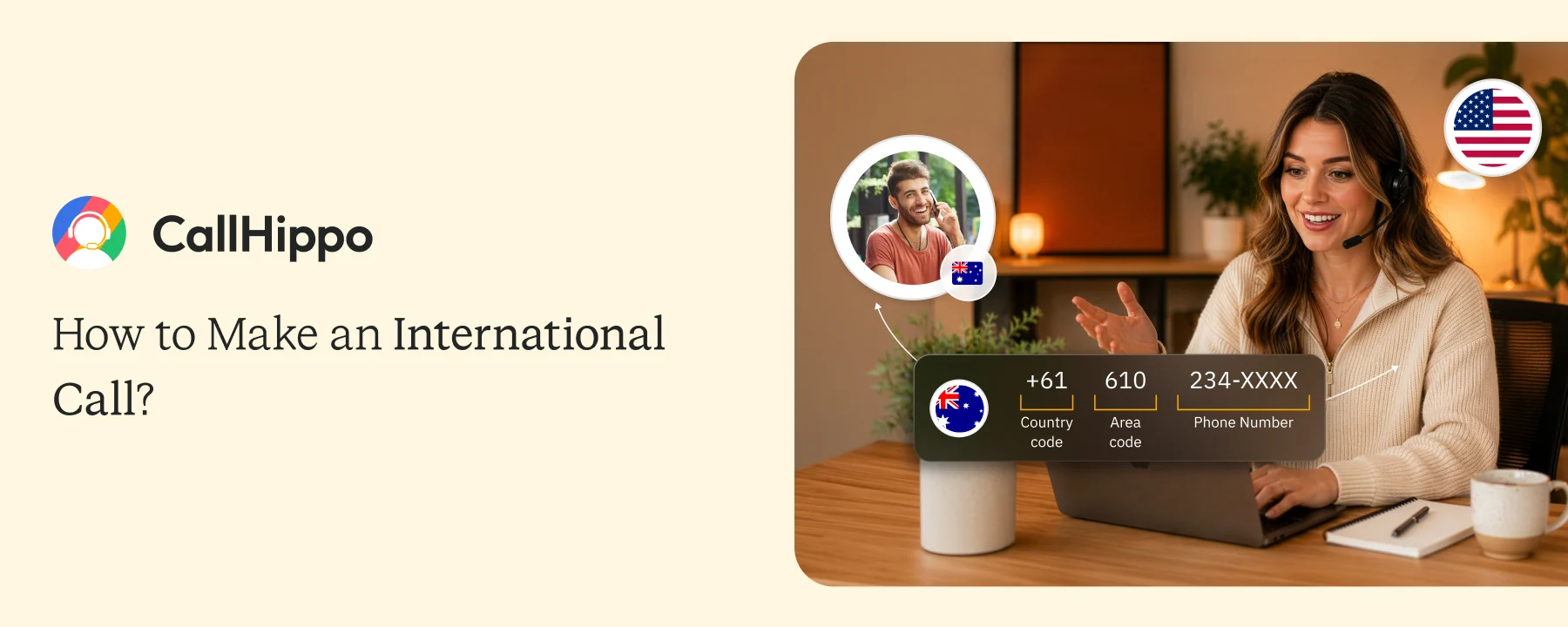
Every international call requires three pieces of information: an exit code, a country code, and the local phone number. Miss any one of them, and the call will not connect. The good news is that once you understand the structure, dialing internationally is straightforward.
How International Calling Codes Work? (Exit Codes, Country Codes & Area Codes)
Three building blocks make up every international phone number you dial.
1. Exit Code (or International Access Code)
The exit code tells your carrier you are placing an international call. In the US and Canada, the exit code is 011. In most of Europe, Australia, and Asia, it is 00. On a mobile phone, you can press and hold the 0 key to enter the + symbol, which works from any phone in the world.
2. Country Code
The country code identifies the country you are calling. The US and Canada share +1. The UK is +44, Australia is +61, India is +91, China is +86, Brazil is +55, Germany is +49, France is +33, and Jamaica is +1-876. Every country in the world has its own country code.
3. Area Code Plus the Local Number
Once the country code is in, the rest is the actual number. One important rule: most countries write local numbers with a leading 0 (for example, UK numbers like 020-XXXX-XXXX). You drop that 0 when dialing internationally.
So a complete international call looks like: Exit code + Country code + Area code + Local number.
How to Make an International Call From the US? (Step-by-Step)
Here is exactly how to dial international from US numbers, regardless of which phone you are on.
Step 1: Dial the US exit code: 011. Or, on a mobile phone, hold the 0 key until + appears.
Step 2: Dial the country code of the destination. For example, 44 for the UK, 91 for India, 49 for Germany.
Step 3: Dial the area code without the leading 0. If the local number starts with 0, drop it.
Step 4: Dial the rest of the local number.
A complete US-to-UK call to 020-7946-0958 in London would look like: 011 + 44 + 20 + 7946 0958.

Save the full international number in your contacts the first time. It saves a lot of mistyping later, especially if you call that number regularly.
How to Make an International Call From a Cell Phone?
Cell phones make international calls easier because the + symbol works anywhere in the world. Just hold the 0 key until + appears, then dial the country code, area code, and local number.
For example, calling +1-555-123-4567 to Canada works from any country without changing the format. The phone automatically applies the correct exit code based on where you are.
Cell carriers or international calling apps also offer international calling plan options that can drastically cut per-minute costs. Verizon, AT&T, and T-Mobile each have dedicated mobile phone plan packages, ranging from a few dollars a month for occasional use to unlimited calls to specific countries for travelers who need to stay connected.
How to Dial an International Number From a Landline?
Landline phones use the same structure but without the + shortcut. You must dial the full exit code.
From a US landline: 011 + country code + area code + local number.
From a UK landline: 00 + country code + area code + local number.
Many landline phones have international calling disabled by default. If your call will not connect, contact your provider to enable it. Most office PBX systems also block calls to other countries unless your admin specifically authorizes them.
 : Top 10 Free International Calling Apps
Country Codes for the Most-Called Destinations
Here are the country codes for the most popular international destinations from the US. Bookmark this list for the next time you need to dial.
| Country | Country Code | Country | Country Code |
|---|---|---|---|
5 Ways to Make International Calls: Which Method Is Right for You?
Different methods fit different needs. Here is how the five most common ways to make international calls compare on cost, fit, and limitations.
| Method | Typical Cost | Best For | Limitations |
|---|---|---|---|
The right pick depends on call frequency, who you are calling, and whether you need to maintain a local presence in another country.

CallHippo gives you a local number in 150+ countries with per-minute rates lower than carriers.
How Much Does International Calling Actually Cost?
International calling costs vary widely depending on which method you choose.
- Pay-per-use carrier rates can run $0.50 to $5.00 per minute, especially for less common destinations.
- Carrier international calling plans typically cost $10 to $20 per month and cover around 85 countries.
- WiFi calling uses your basic rates from your domestic plan, so it is often free.
- OTT apps like WhatsApp, FaceTime Audio, Skype, and Google Voice are free over WiFi or data.
- VoIP services charge $15 to $30 per user per month, plus per-minute rates 80 to 95% lower than traditional carriers.
For occasional personal calls, OTT apps are the cheapest. For regular business calls, VoIP services win on cost and call quality.
Troubleshooting: When International Calls Don’t Connect
If your call will not go through, work through this checklist before giving up.
1. Did you dial the exit code?
Forgetting 011 (or +) is the number one cause of failed international calls. Domestic-format dialing will not reach an international destination.
2. Did you drop the trunk prefix?
Most countries’ local numbers start with a 0, and you must drop that 0 when dialing internationally. The UK, Germany, France, and Australia all follow this rule. Italy is the exception: keep the 0.
3. Did you include the country code?
A common mistake is dialing 011 and going straight to the local number, skipping the country code in between.
4. Is international calling enabled on your line?
Many carriers and office PBX systems block international calls by default. Contact your carrier or admin to enable it.
5. Did your call hit an automated number-entry prompt?
Some carriers (T-Mobile especially) ask you to enter a random 2-digit number to confirm you are a human. Listen for the prompt.
6. Are you trying to call a US toll-free number from abroad?
US 1-800/1-888 numbers do not always work from other countries. Ask for the direct line instead.
7. “All circuits are busy” message
This is common during peak hours for some destinations. Wait a few minutes and retry, or place the call through a VoIP app.
8. Watch out for one-ring (Wangiri) scams
If you get a missed call from an unfamiliar international number and call back, you may be dialing a premium-rate line that charges $5 or more per minute. Verify the number before returning the call.
Making International Calls for Business
Business international calling is a different game from personal. The volume is higher, the per-minute cost matters more, and customers expect a local number on caller ID, not a foreign one.
A startup making 200 outbound international calls a week cannot pay $1 per minute. A support team handling inbound calls from worldwide customers cannot rely on WhatsApp. Scale, reliability, and customer experience change the math entirely.
Here are the three options that businesses can opt for:
- Carrier business plans: Per-line international packages from major US carriers. Reliable but expensive at scale.
- OTT business services: Google Voice for Workspace and WhatsApp Business work for some destinations but are not built for high-volume outbound calling.
- Cloud phone systems with virtual numbers: Providers like CallHippo, RingCentral, Vonage, and Google Voice for Workspace let you buy a local number in the country you are calling, route inbound calls to your team, and place outbound calls that show your local presence. Per-minute rates are typically 80 to 95% lower than carrier rates, and you can scale across worldwide regions without buying any hardware.
- A virtual number in your customer's country can lift answer rates by 25 to 35% compared to calling from a foreign number. Customers are far more likely to pick up a familiar local code than an unknown international one.
For most growing businesses, the cloud phone option wins on cost, flexibility, and customer experience. It also helps companies save money compared to traditional carrier plans, especially when call volume crosses a few hundred minutes per month.
Conclusion
Making an international call is straightforward once you know the structure: exit code, country code, area code, and local number. The right method depends on how often you call and who you are calling. For occasional personal calls, OTT apps are usually free.
For business, a virtual number on a cloud phone system like CallHippo saves money and helps you stay connected with customers around the world. With local numbers in 150+ countries and per-minute rates up to 95% cheaper than carriers, you do not even have to pay basic rates 10x higher than they need to be.

CallHippo offers local numbers, smart routing, and call analytics you need to operate like a local in every market.
Take a 10-Day Free Trial No credit card required!Frequently Asked Questions
1. What is the cheapest way to make international calls?
For personal use, an OTT app like WhatsApp, FaceTime Audio, or Skype is the cheapest. Both parties need the app and an internet connection, but the call itself is free. For business, a VoIP or cloud phone service offers the lowest per-minute rates, often 80 to 95% cheaper than traditional carriers.
2. Why does my international call ask me to enter a random number?
Some carriers, especially T-Mobile, use this as a captcha-style check to confirm you are a human and not an automated dialer. Listen for the prompt and enter the requested digits. The call will continue normally afterward.
3. Can I keep my US number when traveling abroad?
Yes. WiFi calling, OTT apps, and most virtual phone services let you keep your existing US number active from anywhere in the world. Just connect to the internet and dial as usual.
4. Do I need a special plan to start calling Mexico, Canada, or India?
For occasional calls, no. Use an OTT app or your cell carrier’s pay-per-use rate. For frequent calling, an international calling plan or VoIP service will save you significantly more money over time.
Published : May 12, 2026

Harsh Bairagi is a B2B SaaS content writer with over 4 years of experience in the tech industry. Harsh believes in creating good copies to bridge the gap between tech and emotion. When not chasing clean copy or clever metaphors, he is busy catching up on his favorite sports.

Subscribe to our newsletter & never miss our latest news and promotions.
 24k+ people have already subscribed