
 Updated : February 5, 2026
Sometimes your phone fails at the worst moment: batteries die, coverage drops, or calls drop mid-conversation. Calling from a computer offers a solution. You can use a Mac, a Windows PC, or a business VoIP platform, but not all methods handle heavy use.
Mac and Windows work for occasional calls but struggle when call volume rises. VoIP platforms, with browser calls, virtual numbers, automatic logs, and multiple users, stay reliable even for frequent calls. This guide explains each method and where it can fail.
Methods to Make Phone Calls From a Computer
You can make unlimited phone calls from a computer using a MacBook, a Windows PC, or a VoIP platform. I’ll explain to you how to do it:
1. Calling From a Mac (Apple)
Mac users often rely on a mobile phone (iPhone) for calling through macOS. How it works:
- Sign in to the same Apple ID
- Enable “Calls on Other Devices”
- Call through FaceTime or Contacts
- The cell phone must stay nearby
- The carrier signal still controls quality
- No call recording
- No number separation
This setup fails the moment calls exceed personal use.
- One of our consultants used this method for client calls. Once daily calls crossed 15–20, follow-ups slipped because nothing was logged.
2. Calling From a Windows PC
Windows users rely on Phone Link. Here are the steps you need to follow while calling from a Windows PC:
- Pair your phone with Windows 10 or 11
- Enable call access
- Use PC audio devices
It works when phones are charged, and Bluetooth stays stable.
- A recruiter in our company tried Phone Link for interviews. Once the schedules were filled up, missed notes became a problem. The tool did not fail technically. It failed operationally.
3. Calling Using Business VoIP Platforms
This is where calling from a computer becomes reliable. Business VoIP platforms allow:
- Browser-based calling
- Virtual numbers
- Automatic logging
- Multi-user access
The difference shows up after week two, when call volume rises.
- Our sales team moved to browser calling. Reps stopped delaying calls because dialing took very few seconds. This is the reason why teams stay with this method.
How To Call Someone From a Computer Using CallHippo?
CallHippo is designed for sustained calling. You can call someone from a computer for both domestic and international calls using CallHippo, following the exact process below:
- Log in through browser or desktop app
- Choose a virtual number
- Connect a USB headset
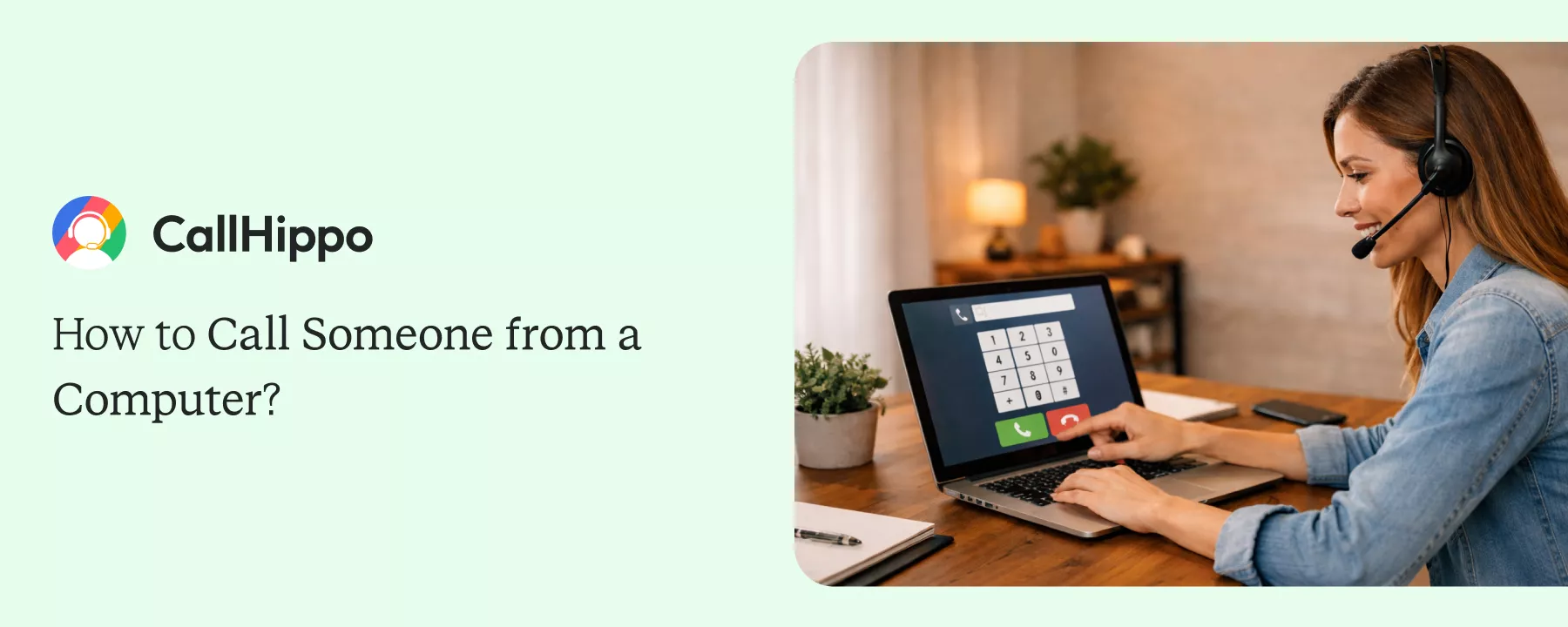
- Open the dialer (It has a phone icon)
- Enter the number and call
This setup lets you call someone from a computer without relying on a mobile device. What matters in practice:
- Shared numbers reduce missed calls
- Call logs remove guesswork
- Recordings support review
- Our sales manager no longer asks reps for updates. The missed calls and follow-ups are visible without continuously asking people.
You can call someone from a computer for both domestic and international calls using CallHippo. To make calls even faster, Try CallHippo’s Click-to-Call . It lets you dial numbers directly from your browser or CRM.
Other Apps for Calling From a Computer
Different tools let you call a phone number from a computer, but they serve very different use cases. Some work well for low-volume or personal use. Others suit small teams or data-focused operations. Understanding where each tool fits and where it starts to fall short helps avoid switching costs later.
1. Google Voice
Google Voice is a simple option for individuals or very small teams that need to make or receive calls from a computer without a complex setup.
How to call from a computer using Google Voice
- Sign in to your Google Voice account in a web browser
- Choose or link a Google Voice number
- Connect a headset or use your computer’s microphone and speakers
- Open the dial pad or contacts tab
- Enter the phone number and place the call directly from the browser
2. Quo (Openphone)
Quo, also known as OpenPhone, is built for small remote teams that want shared business numbers and basic collaboration.
How to call from a computer using Quo
- Create a Quo account and select a business phone number
- Log in through the web app or desktop application
- Plug in a headset or enable system audio
- Use the dialer or contact list to call a phone number from your computer
- Share conversations and call history with teammates through the inbox
3. Dialpad
Dialpad is designed for teams that want deeper call insights and analytics while making calls from a computer.
How to call from a computer using Dialpad
- Sign in to Dialpad via browser or desktop app
- Assign a business number to your account or click on the number in the search bar.
- Connect a wired headset for stable call quality
- Use the built-in dialer to place calls from your computer
- Review call transcripts and analytics after each conversation
Key Considerations When Choosing a Computer Calling Solution
While you choose a computer calling solution, you need to consider the pricing, scalability, ease of use, security, compliance, and emergency calling. I’ll explain it to you in detail.
1. Pricing and Scalability
Start with pricing that matches your current call volume. Then look at what happens when usage grows.
Some tools charge per user. Others charge per number or per minute. The risk shows up when outbound calls increase or more teammates join. Costs can rise faster than expected.
- Check:
- How pricing changes when you add users
- Whether outbound calls are capped or metered
- If advanced reporting requires higher plans
A solution that looks affordable for one user may become expensive for a five-person team.
2. Ease of Use and Onboarding
Calling from a computer should reduce friction, not add steps. If agents need training just to place a call, adoption drops. Look for tools where calling works inside the browser or desktop app with minimal setup.
- Pay attention to:
- How long does it take to place the first call
- Whether non-technical users can manage settings
- If daily calling requires switching between tools
The best systems disappear into the workflow. The worst ones interrupt it.
3. Security and Compliance
Calls made from a computer still carry customer data. That includes phone numbers, recordings, and call logs. Basic encryption is not enough for business use. You need clear policies around data access and storage.
- Confirm:
- How call data is encrypted in transit and at rest
- Who can access recordings and logs
- Whether the provider follows regional compliance standards
This matters more when calls involve sales, support, or regulated industries.
4. Emergency Calling (E911)
Emergency calling is often overlooked until it is needed. If your team uses computers instead of desk phones, E911 ensures emergency services receive a real location, not just a virtual number.
- Does the system support E911 for computer-based calls
- Can locations be updated for remote employees
- What happens during power or internet outages
For distributed teams, this is not optional.
Benefits of Calling From a Computer for Businesses
There are many benefits of calling from a computer for businesses, like efficiency, multitasking, cost savings, CRM integrations, AI-powered features, shared business phone numbers, and much more. I’ll explain it to you.
1. Efficiency and Multitasking
When calls happen on a computer, work stays in one place.
An agent can speak to a customer, open the account record, and write notes at the same time. There is no switching between a phone and a screen. That saves seconds on every call.
Those seconds add up during long calling sessions. Less context is lost. Fewer details are missed. Follow-ups become clearer because notes are written while the conversation is still fresh.
This matters most for sales and support teams handling back-to-back calls.
2. Cost Savings Compared to Traditional Phone Lines
Computer calling removes physical phone infrastructure.
There are no desk phones to buy. No PBX boxes to install. No maintenance contracts tied to hardware. Calls run over the internet using headsets teams already own.
International and long-distance calls also cost less. Internet-based calling avoids carrier markups that traditional phone plans still include.
For growing teams, this reduces fixed costs and makes monthly spend more predictable.

See how CallHippo lets you dial, track, and follow up from your computer with real reliability.
3. Shared Business Phone Numbers
A business number should belong to the company, not a person.
Calling from a computer allows multiple users to answer and place calls from the same number. If someone leaves the team, the number stays active. Customers do not have to update contacts or learn a new line.
Shared numbers also help with coverage. Calls can be routed, transferred, or picked up by available team members without exposing personal mobile numbers.
This keeps communication consistent as teams grow or change.
4. CRM and Tool Integrations
Manual dialing slows everything down. When calling tools connect with CRMs, agents can click a number and call immediately. No copy-pasting. No misdialed numbers.
Call details are logged automatically. Notes, recordings, and outcomes attach to the right contact without extra steps.
This reduces errors and keeps records clean. It also makes follow-ups easier because the full call history is already there.
5. AI-Powered Features
Some systems offer call summaries, transcripts, and basic analysis.
Used properly, these features save review time. Managers can scan summaries before listening to full recordings. Patterns become easier to spot across many calls.
They do not replace judgment. They help teams focus attention where it matters. Calls still need to be heard. Context still matters.
When treated as support tools, not shortcuts, they add real value.
Impact of Computer Calling on Sales Velocity and Outbound Call Volume
Computer dialing reduces dialing friction, improves lead response time and daily call capacity, and allows better tracking and follow-ups.
1. Reduced Dialing Friction
Every extra step before a call reduces the number of calls made. Calling from a browser removes those steps. Agents do not reach for a phone. They do not dial manually. They click and speak.
Fewer actions per call lead to more calls completed in the same amount of time.
2. Faster Lead Response Times
Speed affects outcomes.
When a lead comes in, browser-based calling allows immediate action. There is no hesitation about switching devices or finding numbers. The call happens while interest is still high. That increases the chance of a real conversation instead of voicemail.
For inbound leads, this timing difference matters more than scripts or pitch changes.
3. Higher Daily Call Capacity
Computer calling reduces mental fatigue.
Agents stay focused longer when tools do not interrupt their flow. Headsets are lighter than phones. Screens show context without extra searching.
That focus supports longer calling blocks without burnout. Over a day, that leads to more completed conversations.
4. Better Call Tracking and Follow-Ups
Memory is unreliable during busy days.
Computer-based systems record what happened. Call times, outcomes, notes, and recordings stay attached to each contact. Follow-ups are based on facts, not recollection. Managers can review activity without guessing. Coaching becomes specific instead of general.
When data replaces memory, performance improves in measurable ways.
Conclusion
Calling from a computer works when the setup matches how people actually place calls. Not how tools describe it. When audio is stable, dialing is fast, and call data stays in one place, teams stop thinking about the phone and focus on the conversation.
Most problems come from small choices. Using the wrong headset. Relying on Wi-Fi that drops under load. Picking software that looks good at low volume but strains once calls increase. Those details decide whether computer calling helps or becomes another workaround.

See how CallHippo handles high-volume calls and follow-ups reliably.
Take a 10-Day Free Trial No credit card is required!FAQS-
1. What internet speed is required to make calls from a computer?
For voice-only calls, the internet requirement is low. Around 100 kbps is usually enough. Screen sharing or video needs more headroom. In practice, 1–2 Mbps works, but 5–25 Mbps is safer once other apps are running. For teams calling at the same time, 50 Mbps or more prevents audio drops.
2. Can I make and receive international calls from a computer?
You can make and receive phone calls from a computer without much effort. Most people use VoIP apps such as Skype, WhatsApp, or Google Voice. Businesses often rely on VoIP (Voice over Internet Protocol) phone systems like CallHippo instead. As long as your internet connection is stable, the call works the same way it would on a phone, just through your laptop or desktop.
3. Is calling from a computer secure for business use?
Calling from a computer is safe for business calls when the provider uses call encryption and proper access controls. Most risks come from poor setup, not the calling method itself.
4. What is E911, and why is it important for computer calling?
E911 is a service that shares your registered address with emergency services when a 911 call is made from a computer or internet-based phone. Since computer calling does not rely on a physical phone line, emergency responders cannot see your location automatically unless E911 is set up. It matters because it removes guesswork during emergencies and helps responders reach the right place faster, even when teams work remotely or move between locations.
5. Can I make free calls through the internet?
You can make free calls and receive incoming calls over the internet using apps like WhatsApp or Skype, as long as both people are online and using the same app. Google Voice also allows free calls within the US, but it works a bit differently and has some regional limits.
6. What Do You Need To Call From a Computer?
Calling from a computer fails for predictable reasons. Almost all problems to call a phone from a computer trace back to one of these three areas.
- Stable Internet Connection
- Sound Equipment
- Business Phone App (VoIP Software)
Published : February 2, 2026

Priya Naha is an experienced technical content writer who focuses on VoIP and telephony technologies. Her expertise in telecommunication and content marketing allows her to simplify complex topics with real-world knowledge, making her writing relatable, informative, and easy-to-read. Her direct involvement with VoIP products and solutions makes her a reliable voice in the field.

Subscribe to our newsletter & never miss our latest news and promotions.
 24k+ people have already subscribed