
 Updated : August 13, 2026
I have spent decades in this industry, and I have watched sales teams obsess over the pitch.
They rewrite scripts, train reps, buy better data, then they call a promising prospect in another country, and the phone simply rings out.
No answer, no callback. Nothing. The truth is hard to accept but simple to understand.
Most international calls are lost before a single word is ever spoken. Let me explain why and what actually fixes it.
Most Calls Get Rejected Before Anyone Says a Word
Picture one of your best reps. She has a sharp pitch and a clean, well-researched list. She dials a perfect-fit prospect in another country. The phone rings. And rings. Then it stops. The prospect glanced at the screen, felt nothing, and let it go. She never got to say a word.
This is where most international calls die. Not in the conversation, but in the half-second before anyone answers. Your team has optimized everything around that moment.
The script, the timing, the list, the follow-up. Everything except the one instant that decides whether any of it gets heard.
It’s Not the Pitch. It’s the Unknown Number.
Here is the mechanism, and it is deeply human. A phone rings with a number nobody recognizes.
A strange country code and an area code from nowhere familiar.
In that instant, the prospect makes a snap decision. Unknown number, probably not important, let it ring.
It does not matter how relevant your call would have been. They will never find out.
This is neither a spam problem nor a targeting problem. It is a trust problem, and it strikes before trust has any chance to form.
You are being judged on your number, not your message.
 : Best Virtual Phone Number Apps
Sales Teams Keep Fixing the Wrong Problem
So what do most teams do about it? They fix the wrong thing. Pickup rates fall, so,
- They sharpen the script again.
- They train reps harder on handling objections.
- They simply dial more, hoping sheer volume covers the gap.
Every one of those fixes targets the conversation. But the call never reached a conversation level; it was rejected on sight.
Some teams even grab numbers from free virtual phone number providers to cut costs, yet a random foreign number still gets ignored.
And it gets worse as you grow. The more you scale outbound across countries, the bigger this blind spot becomes. More of your list turns into unfamiliar-number territory, and more good calls quietly vanish.
: Why Your Dialer and VoIP Provider Should Be the Same Product?The Real Issue Isn’t What You Say, It’s What Shows Up on Screen
So let me reframe the whole problem. Whether your call gets answered has almost nothing to do with what your rep plans to say.
It comes down to one thing.
This is exactly why the strongest teams use a virtual phone number for each market they call.
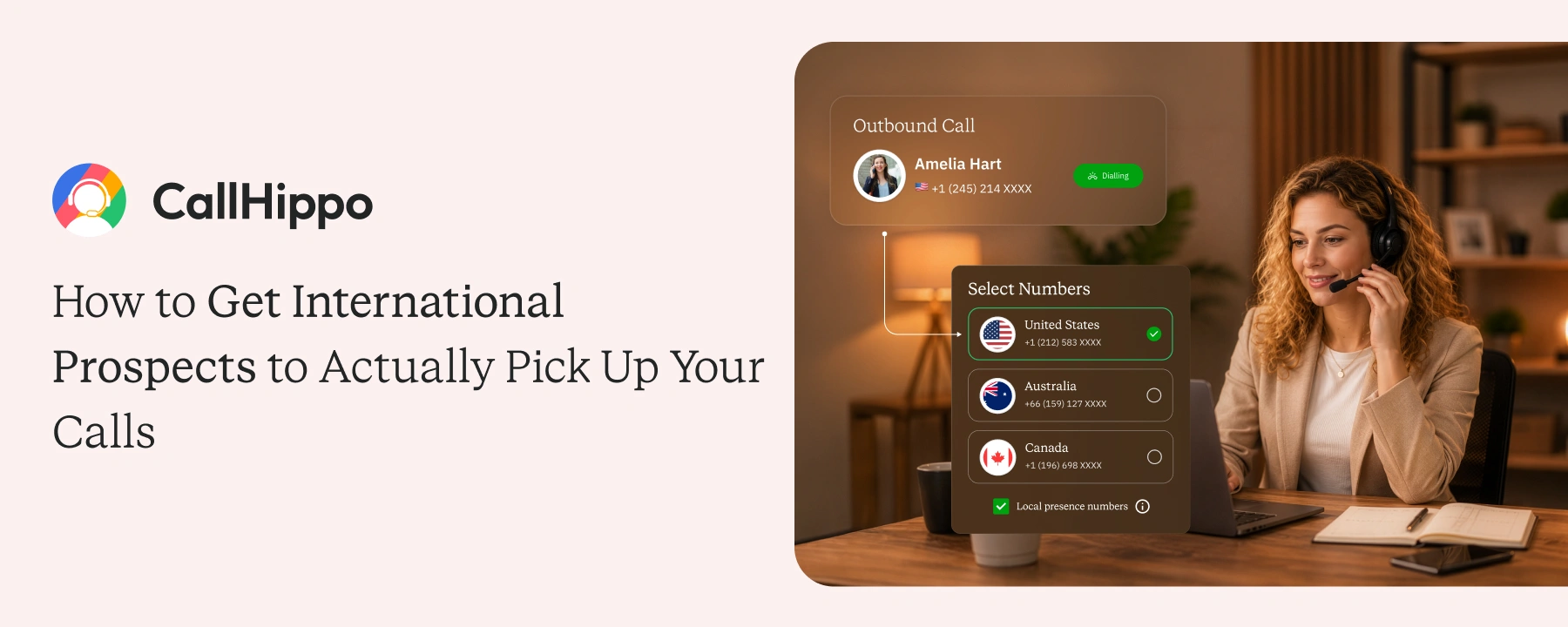
With CallHippo, they dial out from a local number in the country they are calling, so the prospect sees a familiar number instead of a stranger from abroad. The pitch has not changed, but the number has. And that alone changes who picks up.
Check What Your Outbound Numbers Actually Look Like
Here is something you can do today, in five minutes.
Pull up the numbers your team dials out on. Now picture each one landing on a prospect’s phone in another country.
Be honest with yourself. Would they recognize it, or would they let it ring?
Most sales leaders have never run this simple check. They pore over call recordings and scripts, yet never look at the number itself.
This one audit usually explains more of your pickup problem than any pitch review ever will. If the number looks foreign, that is your leak. And it is one of the easiest things to fix. You can buy local phone numbers for each market and start sounding local overnight.
A Great Pitch Doesn’t Matter If the Call Never Gets Answered.
So come back to that rep from the start. The one with the sharp pitch and the clean list.
If her number looks foreign, none of it matters. She is losing before the call ever connects. This should make every sales leader pause and analyze,
- How much of what you call a conversion problem is really a pickup problem?
- How many strong pitches has your team never gotten the chance to deliver?
- How long has that been true, quietly, without anyone stopping to check?
: How to Get a Virtual Business Address and Phone Number Free?Conclusion
For all our focus on what happens during a call, we forget the moment before it. That half-second on the screen decides everything. You can keep polishing the pitch, or you can fix the number that gets it heard.
In every market I have watched, the teams that win are simply the ones people are willing to answer. Give your prospects a number they trust, and the conversation you have worked so hard to perfect will finally get its chance.

Published : August 13, 2026

Ankit Dudhwewala is the CEO and Co-founder of CallHippo, a leading virtual phone system designed to optimize business communication through AI and automation. With a strong background in marketing and business administration, Ankit has successfully built and bootstrapped CallHippo. Ankit’s leadership and innovative approach have made him a prominent figure in the SaaS industry, driving growth and shaping the future of business communication solutions.

Subscribe to our newsletter & never miss our latest news and promotions.
 24k+ people have already subscribed