
 Updated : September 15, 2026
You staff your team for English, then a call comes in Spanish, French, or Arabic. There is no concrete plan for managing such a situation.
The caller waits on hold. Your rep transfers the call to someone who might not speak the language. The caller hangs up.
This happens every day in companies that hire for their most common language and hope for the best.
Most teams discover their language gaps when a customer calls in a language they do not support. The cost of that discovery is the customer itself.
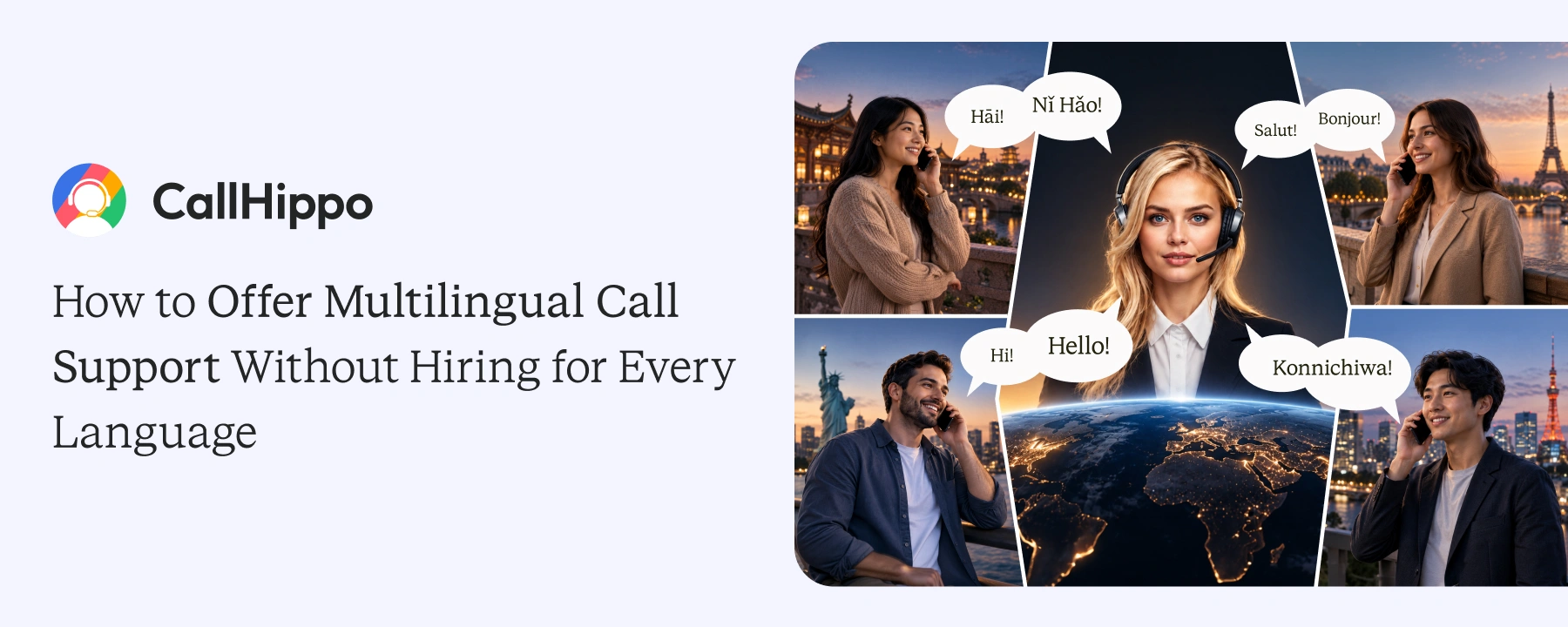
In this blog, we will explore how to offer multilingual call support without hiring for every language.
What Happens When a Customer Calls in a Language Your Team Doesn’t Support
Unsupported language calls expose critical gaps in your team and process. These gaps become visible the moment a customer reaches out in a language you cannot support.
1. Most Teams Only Hire for Their Most Common Language
You hire for your largest segments. English teams hire English speakers. Spanish markets hire Spanish speakers. This works until it doesn’t. One customer in an unsupported language exposes the gap immediately.
2. Transferring, Holding, or Hanging Up All Lose the Customer
The standard responses all fail.
- Transfers lead to dead ends.
- Extended holds increase abandonment.
- Hanging up ends the relationship permanently.
The customer receives the message their business is not wanted.
 : Why Most AI Voice Agents Fail After Launch? (How to Fix it)
Why This Problem Keeps Coming Back as You Grow
Language gaps recur as your business expands globally into new markets. Each new geographic region introduces additional languages that your current team cannot support.
1. Hiring Follows the Loudest Language, Not All of Them
Hiring responds to the languages that generate the most complaints or revenue. This reactive approach means new languages are only addressed after customers are already lost. Quiet languages never receive attention until they become problems.
2. Call Volume by Language Usually Isn’t Tracked
Most call centers track volume, wait times, and resolution rates. Few track volume by language. Without this data, you cannot make informed decisions about which languages to support. You are operating blind to actual demand.
3. Every New Market Adds a Language You Haven’t Covered
Expansion into new markets introduces new languages. A US company expanding to Europe adds French, German, Italian, and Spanish. A company entering Asia adds Mandarin, Japanese, Korean, and more. Each new market creates a new language gap.
: Why Your Brand Disappears the Moment You Call a ProspectThe Real Cost of an Unhandled Call in the Wrong Language
Missing language support has a significant financial impact on your business. The cost accumulates through lost deals, repeat contacts, and blocked market segments.
1. A Lost Deal Looks Like a Bad-Fit Lead in Your CRM
When a customer calls in an unsupported language and hangs up, that interaction gets logged as a bad-fit lead. The CRM shows a lost opportunity, but the root cause remains invisible. The cost is systematically undercounted.
2. An Unresolved Ticket Becomes a Repeat Contact
Customers who cannot get help in their language call back multiple times. Each repeat contact increases costs while decreasing satisfaction. The problem compounds over time.
3. One Missing Language Becomes Several as You Expand
The cost of missing one language is significant. The cost of missing multiple languages is exponential. Each unsupported language represents a blocked market segment and lost revenue.
Four Ways to Cover Multilingual Calls Without Hiring for Every Language
Four options to handle multilingual calls without hiring for every language. Each approach has different tradeoffs based on call volume and business requirements.
| Option | Best For | Tradeoffs |
|---|---|---|
| High-volume languages, complex issues | High cost, limited coverage, scaling challenges | |
| Rare languages, high-stakes calls | Per-minute costs, slower resolution, dependency on availability | |
| Medium-volume languages, routine inquiries | Limited conversational ability, requires caller selection | |
| Multiple languages, 24/7 coverage, routine to moderate complexity | Requires setup, may need human escalation |
CallHippo’s AI Voice Agent detects the caller’s language and handles the conversation directly, with escalation to a human agent when needed.
The system supports multilingual conversations without requiring the caller to navigate menus. This provides 24/7 coverage across multiple languages.
How to Roll This Out Without Overbuilding
Implement multilingual support without overbuilding your infrastructure. The right approach matches solutions to actual demand rather than hypothetical scenarios.
1. Measure Which Languages Are Actually Calling In
Before investing, measure which languages are actually contacting your business. Track call volume by language for at least 30 days. This data prevents overbuilding for minimal demand while ensuring coverage for real opportunity.
2. Match Each Option to Call Volume and Risk
Not every language requires the same solution. High-volume languages may justify bilingual hires. Rare languages with high-stakes calls may warrant interpreters. Medium-volume routine calls work well with AI or IVR. Match the solution to volume and risk.
3. Build a Clear Escalation Path to a Human Agent
Any automated solution must have a clear escalation path. AI voice agents should recognize when they cannot resolve an issue and transfer to a human with full context. IVR systems should always offer an option to speak with a person.
: Best Auto Dialer Software Tools: Tested and Ranked for Outbound Sales TeamsConclusion
Multilingual call support does not require hiring for every language. The right mix of bilingual staff, on-demand interpreters, intelligent routing, and AI voice agents can provide comprehensive coverage without unsustainable costs. The key is matching the solution to the actual demand and business risk of each language segment.

Frequently Asked Questions
1. What’s the difference between an AI voice agent and multilingual IVR routing?
AI voice agents conduct full conversations. IVR only routes callers to language-specific queues or menu options.
2. Can an AI voice agent handle a support call in a language with no human backup available?
Yes, but complex issues may lack resolution. Human backup is recommended for important languages.
3. Is an outsourced multilingual call center cheaper than hiring bilingual staff in-house?
Outsourcing can be cheaper for low-volume languages but may lack product knowledge and brand alignment.
4. How accurate is real-time AI call translation compared to a human interpreter?
Humans excel at complex conversations. AI works well for routine inquiries but still lags in nuanced situations.
5. How do I decide which languages to cover first?
Measure call volume by language. Prioritize high-revenue languages and regulatory requirements, then expand based on demand.
Published : September 15, 2026

Satyaki is an SDR Lead at CallHippo with over three years of experience in B2B and B2C SaaS sales, specializing in lead generation, pipeline management, and international markets. Passionate about building meaningful connections, he brings a strategic yet people-first approach to driving business growth.

Subscribe to our newsletter & never miss our latest news and promotions.
 24k+ people have already subscribed