


 Updated : March 11, 2026
Smooth communication has become the backbone for businesses to operate confidently.
As per a report, 92% of all customer interactions happen over the phone. This underscores the importance of reliable calling tools for teams.
Many companies explore alternatives that offer services like Ooma when they need better flexibility and more modern features to keep their teams connected.
If your business is in a similar situation, this guide will help you understand why exploring options makes sense and how to choose the right one.
Why Businesses Look for Ooma Alternatives?
There could be many different reasons behind businesses searching for an alternative to Ooma. We have shortlisted the most common issues. Let’s take a look.
1) Limited Collaboration & Video Tools
When companies need a unified communication system, switching between multiple apps slows down workflows and reduces team productivity.
Teams want unlimited calling, chat, and video, so they can respond faster and coordinate smoothly. Ooma’s limited video capabilities make this difficult for growing businesses. As a result, they move to platforms that offer deeper collaboration.
2) Reliability & Security Concerns
Even small disruptions in call quality can affect sales calls, customer support, or internal communication. Teams that operate across multiple locations need strong uptime guarantees and stable call performance.
Companies want stronger encryption, better access control, and advanced compliance support. When businesses feel unsure about the reliability, they start looking for a more dependable option.
3) Customer Support Limitations
Fast and helpful customer support is essential for any communication platform. Many users report slow responses from Ooma during peak hours.
Delays in resolving technical issues can disrupt operations and create unnecessary downtime. When support becomes inconsistent, businesses naturally shift toward platforms that offer responsive service.
4) Feature Gaps (Team Messaging, Analytics, Queues, Integrations)
Ooma’s feature limitations often become more noticeable as teams scale. Businesses today need,
- Team messaging
- Strong analytics
- Call forwarding and routing
- Rich integrations with CRM
Ooma’s basic plans either limit more advanced features or exclude them entirely. This makes it difficult for teams to optimize performance.
Therefore, when these essentials are missing, businesses start evaluating Ooma competitors.
5) Scaling Issues & Hidden Costs
Scaling with Ooma is not as smooth as expected. It often requires additional fees or plan upgrades.
Over time, these hidden costs increase the total cost significantly. Growing companies need flexible systems that accommodate expansion without penalties or expensive add-ons.

How We Compared the Top Ooma Competitors?
To find the best Ooma alternatives, we had to make sure to narrow down certain criteria. Let’s see what factors we have considered to shortlist the best Ooma alternatives.
1) Reliable Call Quality & Strong Uptime
We started our comparison by closely evaluating high call quality and uptime. These two are the main elements that directly influence customer experience.
If calls drop frequently or audio quality fluctuates, businesses lose trust and productivity. That’s why we have prioritized platforms that deliver stable connections, clear voice quality, and dependable performance.
2) Fast and Helpful Customer Support
When teams face any sort of issues, they expect knowledgeable and timely assistance. We compared how quickly each competitor responds. Also, the quality of assistance that they offer.
Businesses need reliable help during system transitions, upgrades, or unexpected issues. Tools that simplify support experiences naturally stood out as better alternatives to Ooma.
3) Useful Features like AI, Call Queues, Multi-level IVR, and Smart Routing
To manage high-volume communication, modern teams rely on
- AI-driven capabilities
- Advanced call queues
- Multi-level IVR
- Intelligent routing
We compared each platform’s ability to automate workflows and streamline customer journeys.

4) Good Integrations with CRM and Business Tools
Integrations were another major evaluation point because they directly impact workflow efficiency. Businesses want communication tools that sync automatically with their CRM, helpdesk, or project management systems.
We compared how deeply each platform integrates to analyze which platform reduces manual work, improves visibility, and helps agents deliver more personalized experiences.
5) Easy to Scale for Multiple Teams or Locations
To check the scalability, we evaluated how easily each platform supports new users, hybrid work models, etc.
Platforms offering centralized dashboards, multi-location support, and robust admin controls stood out. Teams expanding across regions need consistency in communication systems.
6) Affordable Overall Cost, Without Hidden Fees or Expensive Add-ons
Finally, we compared the affordability. At first glance, every platform looks affordable, but it is important to note that add-ons or requirements for international calls or any additional features can cost you extra.
We reviewed pricing transparency, basic calling feature availability, and upgrade requirements. Platforms offering clear pricing and low-cost scalability are included in our recommended list.
- A hosted VoIP system can cost around $10 to $30 monthly. While, an on-premise VoIP can cost between $500 to $1,000 upfront. So, if you are opting for an on-premise system, you pay almost 50 times more in comparison to a hosted VoIP system.
Top 10 Ooma Competitors Worth Considering
Here is the list of top Ooma alternatives. From the reason behind their uniqueness to their pricing plans. We will discuss each point thoroughly. Let’s begin.
1. CallHippo
CallHippo is a fast, flexible, and easy-to-use virtual phone system. It offers AI-powered advanced call routing, sentiment analysis, post-call summaries, smart productivity tools, and a clean interface that makes onboarding simple, even for non-technical teams.
CallHippo’s global virtual numbers make it a strong choice for businesses serving customers in multiple countries. With reliable uptime and transparent pricing, it’s one of the most accessible Ooma alternatives for teams that need more features without a steep learning curve.
Pricing
- Basic: $1 per user/Month
- Starter: $19 per user/Month
- Professional: $29 per user/Month (Popular)
- Ultimate: $45 per user/Month
*Pricing as on 1/12/2025
What We Like About CallHippo:
- Intuitive interface with quick onboarding
- Affordable pricing compared to Ooma and other legacy providers
- Wide availability of international phone numbers
- Strong analytics and call monitoring tools
Where it Needs Improvement:
- SMS messaging availability varies by country
- Integrations set requires higher plan
Who Should Use It:
Startups, small teams, sales/remote teams, and businesses needing global numbers with modern call management features.
- For businesses dealing with international customers, CallHippo offers the feature of timezone dialing. This feature automatically adjusts to the timezone based on your customer’s country. This reduces the chances of calls getting missed are minimized.

Switch to CallHippo and Try it Yourself
2. MagicJack
MagicJack is one of the simplest VoIP solutions in the market. It offers basic services through an easy plug-and-play device or app.
While the feature set is minimal, its extremely low pricing makes it appealing for businesses. MagicJack works best for those who don’t need advanced routing, analytics, or integrations.
Pricing
- 1 Year Plan: $43
- 3 Year Plan: $109
*Pricing as on 1/12/2025
What We Like About MagicJack:
- Very affordable annual pricing
- Simple setup for non-technical users
- Works on mobile and desktop
- Good for basic calling needs
- Reliable for small-scale usage
Where it Needs Improvement:
- No advanced business features
- Not suitable for growing teams
- Limited customer support
- Call quality can vary under heavy usage
Who Should Use It:
Solo entrepreneurs, home users, and micro-businesses need cheap, simple calling.
3. RingCentral
RingCentral is an enterprise-grade cloud communication suite. It offers voice, messaging, video, fax, and advanced team collaboration.
RingCentral is known for its robust reliability and large integration ecosystem. Its app ecosystem, uptime consistency, and scalability make it a solid Ooma alternative for complex communication needs.
Pricing
- Core: $20 per user/Month
- Advanced: $25 per user/Month
- Ultra: $35 per user/Month
- Customer engagement bundle: (Contact for More Details)
*Pricing as on 1/12/2025
What We Like About RingCentral:
- Enterprise-grade features and uptime
- Strong security features and compliance
- Advanced analytics and call management capabilities
Where it Needs Improvement:
- Pricey for small businesses
- Learning curve can be steep
- SMS limitations in some regions
- Add-ons can increase the total cost
Who Should Use It:
Mid-sized to large businesses needing a powerful, scalable communication suite.
4. Zoom Phone
Zoom Phone extends the popular Zoom platform, offering high-quality voice calling, seamless video switching, and a unified communications setup. Businesses already using Zoom Meetings find Phone easy to adopt due to its familiar interface.
Zoom Phone is designed for hybrid and remote teams needing a lightweight, modern communication environment. Zoom phone pricing is divided into three pricing plans. You can select one based on your business needs.
Pricing
- US & CA Unlimited: (Contact for More Details)
- Pro Plus: (Contact for More Details)
- Business Plus: (Contact for More Details)
What We Like About Zoom Phone:
- Smooth integration with Zoom Meetings
- Clean, easy user experience
- Good value for global teams
- Solid set of call management tools
Where it Needs Improvement:
- Limited when compared to enterprise VoIP giants
- Overdependence on Zoom ecosystem
- Some features require higher plans
- Not ideal if video meetings aren’t a priority
Who Should Use It:
Teams that already rely heavily on Zoom and want a unified calling + video workflow.
5. Vonage
Vonage Business Communications offers flexibility with voice, messaging, video calling, and a wide range of integrations. The platform focuses on reliability and operational efficiency.
While its advanced features may require paid add-ons, Vonage Mobile remains a reputable communication provider. It’s best for organizations that need stability over heavy customization.
Pricing
- Mobile: $13.99 per month/per line
- Premium: $20.99 per month/per line
- Advanced: $27.99 per month/per line
*Pricing as on 1/12/2025
What We Like About Vonage:
- Reliable uptime
- Strong mobile and desktop experience
- Highly customizable routing
- Good CRM integrations
- Scales well for distributed teams
Where it Needs Improvement:
- Add-ons can increase costs
- Support can be slow at times
- UI feels dated compared to newer tools
- Video platform isn’t as strong
Who Should Use It:
Multi-location teams and businesses needing dependable communication without complexity.
6. GoTo Connect
GoTo Connect offers a clean interface, strong mobile apps, and flexible admin settings. The drag-and-drop dial plan editor is one of its standout features.
GoTo Connect is known for its reliability and easy setup. Though it costs more than some newer alternatives, it provides a balanced mix of features and uptime.
Pricing
- Basic: $27 per user/per month
- Standard: $32 per user/per month
*Pricing as on 1/12/2025
What We Like About GoTo Connect:
- Drag-and-drop to easily build a call flow
- All-in-one voice, chat, and video
- Good mobile experience
Where it Needs Improvement:
- Pricing is higher than basic VoIP options
- Fewer advanced VoIP features in comparison to other platforms
- Integrations less extensive
- Reports could be more detailed
Who Should Use It:
Small and mid-sized businesses need an all-in-one communication suite with simple routing and dependable performance.
7. Dialpad
Dialpad is a communication platform that offers call transcription, sentiment analysis, and an AI coaching tool. This makes it appealing for sales and support teams.
Dialpad’s interface is modern and lightweight, making it easy to navigate. The platform integrates well with CRMs and support systems. Although powerful, some advanced features are only available on higher plans.
Pricing
- Standard: $15 user/month
- Pro: $25 user/month
- Enterprise: (Contact for More Details)
*Pricing as on 1/12/2025
What We Like About Dialpad:
- Strong AI-powered capabilities
- Modern, user-friendly interface
- Easy CRM integrations
- Excellent for sales & support teams
Where it Needs Improvement:
- AI features require premium plans
- Limited global calling on lower tiers
- Not ideal for highly regulated industries
Who Should Use It:
Sales-centric teams and customer support teams wanting AI insights.
8. Nextiva
Nextiva’s reliability and customer support are highlighted frequently by users. It offers analytics and pipeline tools that help track customer interactions.
Though more expensive than lightweight VoIP providers, it provides a polished enterprise experience. It is a strong Ooma alternative for teams needing stability and long-term scalability.
Pricing
- Core: $52 /user/month
- Engage: $38 /user/month
- Power Suite: $100 /user/month (Up to 100 Agents)
*Pricing as on 1/12/2025
What We Like About Nextiva:
- Excellent customer support
- Reliable call quality
- Workflow automation built in
- Solid security
Where it Needs Improvement:
- Features locked behind tiers
- Complex for very small teams
- Fewer integrations than competitors
Who Should Use It:
Established businesses that value reliability and long-term operational consistency.
9. 8×8
8×8 is a global VoIP and analytics solution suitable for multinational operations. It stands out as it offers unlimited calling options.
Businesses with global teams find their scalability beneficial. The platform includes strong security and compliance support. However, the interface can feel outdated.
Pricing
- Offers multiple plans (Contact for More Details)
What We Like About 8×8:
- Excellent global calling coverage
- Secure and compliant infrastructure
- Scales well with internationally
- Contact center-grade capabilities
Where it Needs Improvement:
- UI feels outdated
- Support can be inconsistent
- Some features require higher plans
- Learning curve for new users
Who Should Use It:
Global teams or companies with high international calling.
10. Phone.com
Phone.com offers affordable VoIP plans designed for small businesses and freelancers. It provides essential calling features, call routing, basic analytics, and video conferencing tools.
The platform is simple to operate, making it suitable for non-technical users. While not as feature-rich as larger competitors, it provides good value for budget-conscious teams. It’s an excellent lightweight Ooma alternative.
Pricing
- Basic: $15/month/user
- Plus: $22.50/month/user
- Pro: $33.33/month/user
*Pricing as on 1/12/2025
What We Like About Phone.com:
- Very affordable plans
- Flexible pay-per-minute options
- Simple interface
- Good basic features
- Solid reliability
Where it Needs Improvement:
- Limited advanced tools
- Basic analytics
- Fewer integrations
- Not ideal for larger operations
Who Should Use It:
Small teams and freelancers wanting simple, budget-friendly business phone service.
Why CallHippo is One of the Best Ooma Alternatives for Growing Teams?
A growing team needs to consider more than just one factor; they have to look for flexibility, pricing, features, etc. Let’s see how CallHippo stands out and why it could be the best fit for businesses.
1) Better Multi-level IVR Flexibility than Ooma
CallHippo offers smarter, more flexible multi-level IVR flows, while Ooma offers basic IVR options. Growing teams often need more granular control. CallHippo makes this easy with a visual, drag-and-drop IVR builder that supports custom prompts and time-based routing.
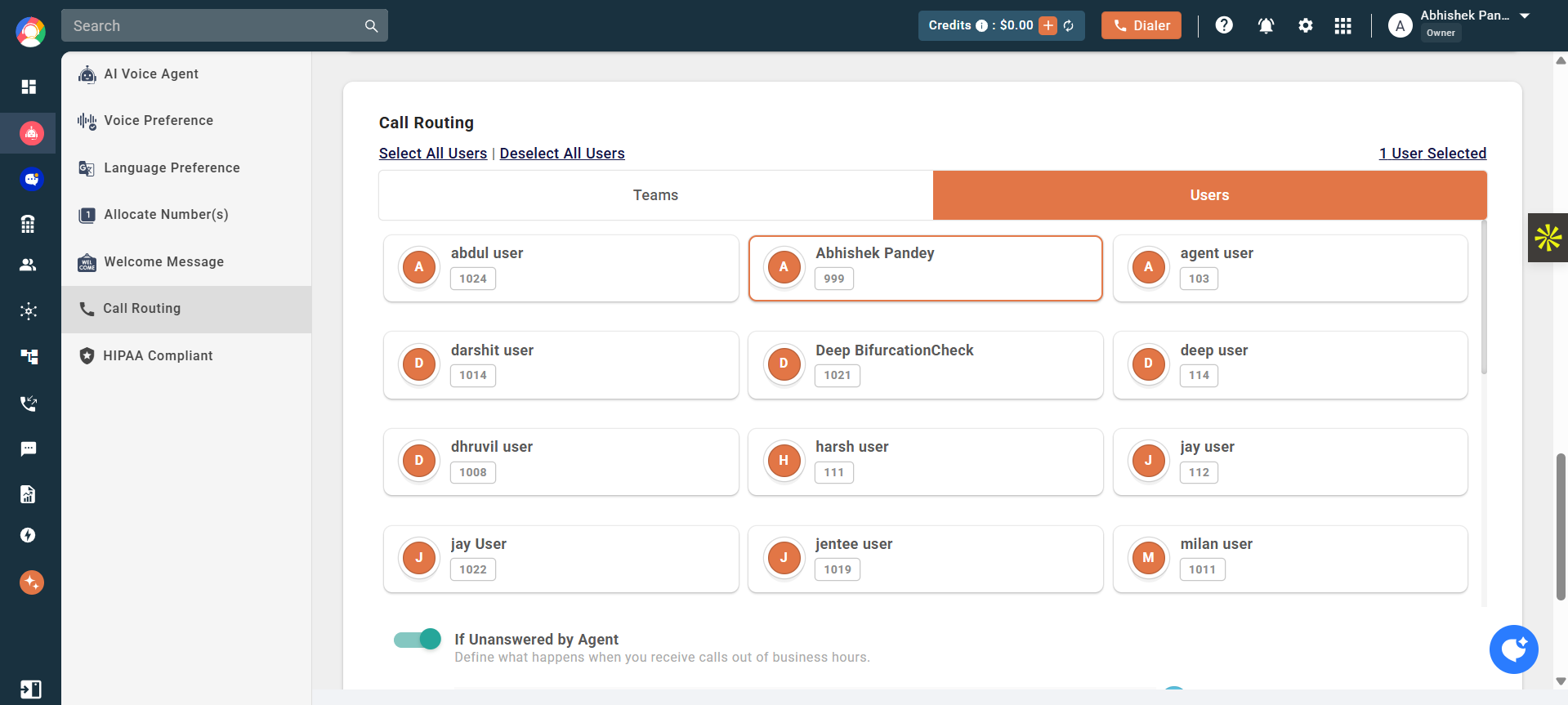
Startups, support teams, and multi-department businesses benefit instantly with CallHippo, as they can tailor call routing easily as per their need. With Ooma, many teams eventually outgrow the limited IVR structure and look for the deeper customization that CallHippo provides.
2) More Automation + Call Workflow Customization
CallHippo gives growing teams much more automation power. Especially for call distribution and post-call actions. The workflow customization allows businesses to build behavior-based rules.
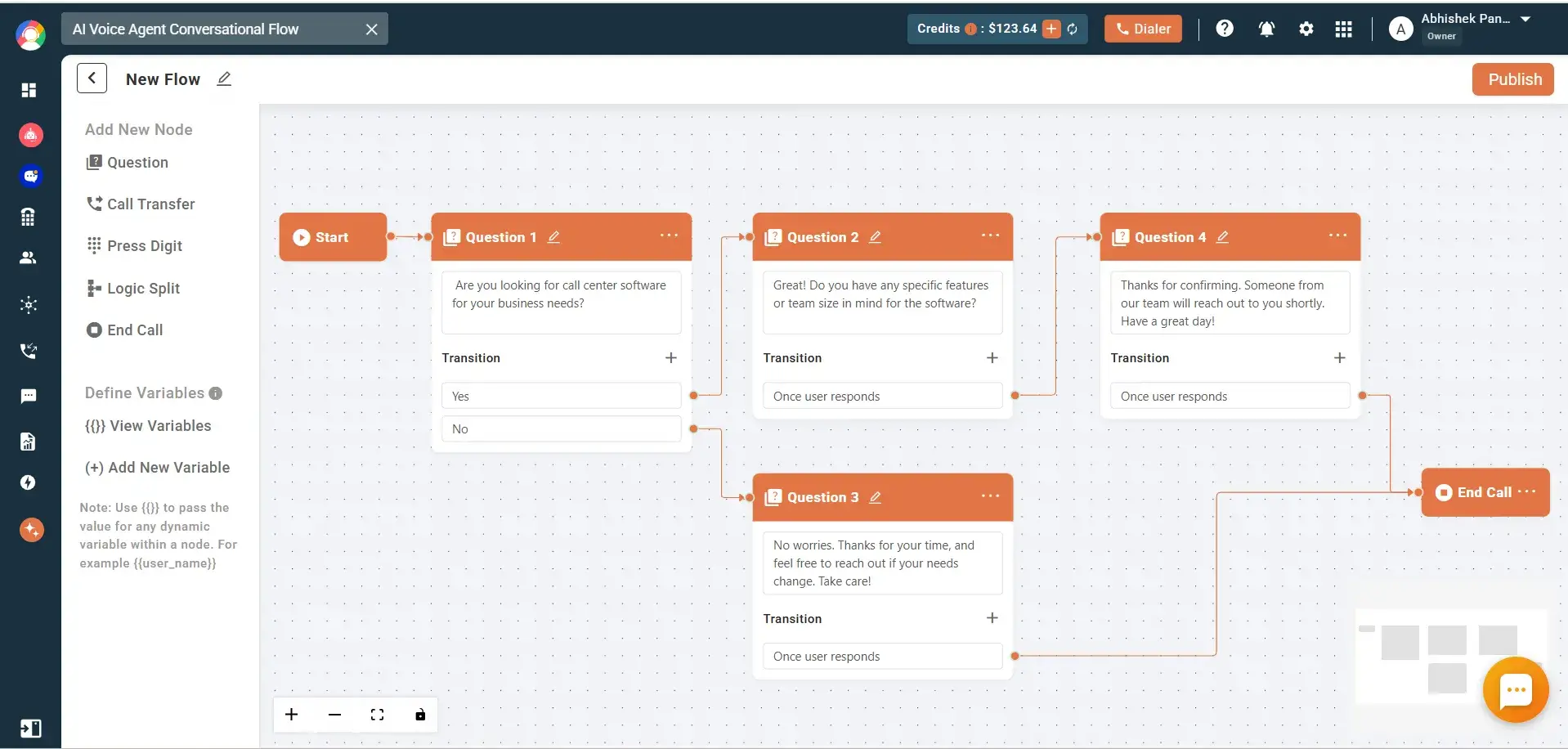
- Scenario 1: If a call is missed twice, it gets forwarded to a senior agent.
- Scenario 2: If a lead calls again within 24 hours, it reaches the same person they spoke to previously.
Ooma’s automation options are limited and not ideal for teams that expect scalability. CallHippo, on the other hand, helps reduce repetitive tasks.
3) Stronger CRM Integrations (HubSpot, Zoho, Pipedrive)
For fast-scaling teams, CRM integrations are crucial. It is an area where CallHippo comprehensively outperforms Ooma.
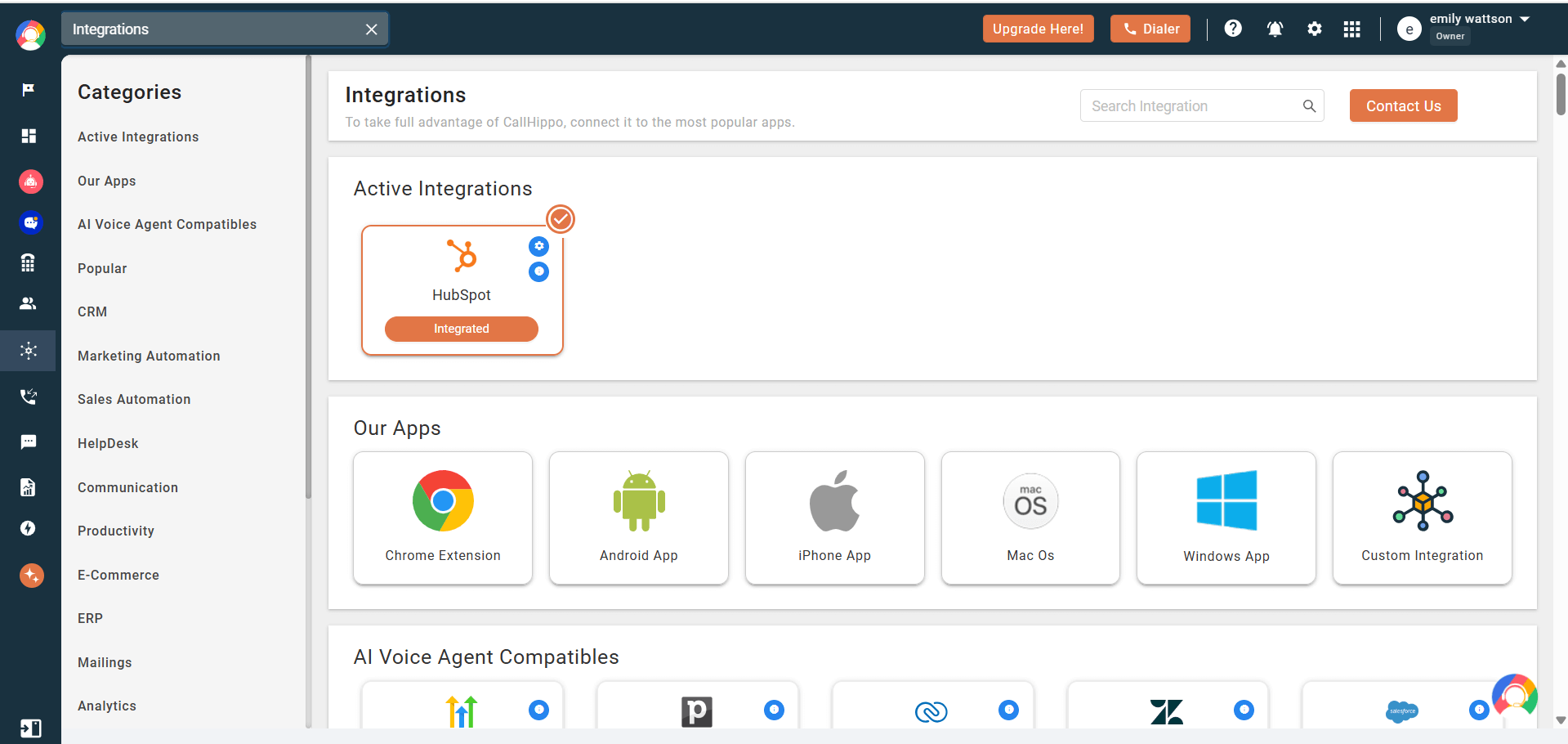
CallHippo integrates seamlessly with major CRMs (HubSpot, Zoho, Salesforce, and many more). These integrations offer businesses,
- Automatic activity logging
- Automatic call recordings inside the CRM
- Click-to-call buttons
- Real-time contact syncing.
While Ooma’s CRM capabilities, on the other hand, are quite limited. This leads to inefficiency and error-prone processes.
With CallHippo, businesses can log customer interactions instantly and help teams improve productivity.
4) Real-time Analytics Missing in the Ooma Standard plan
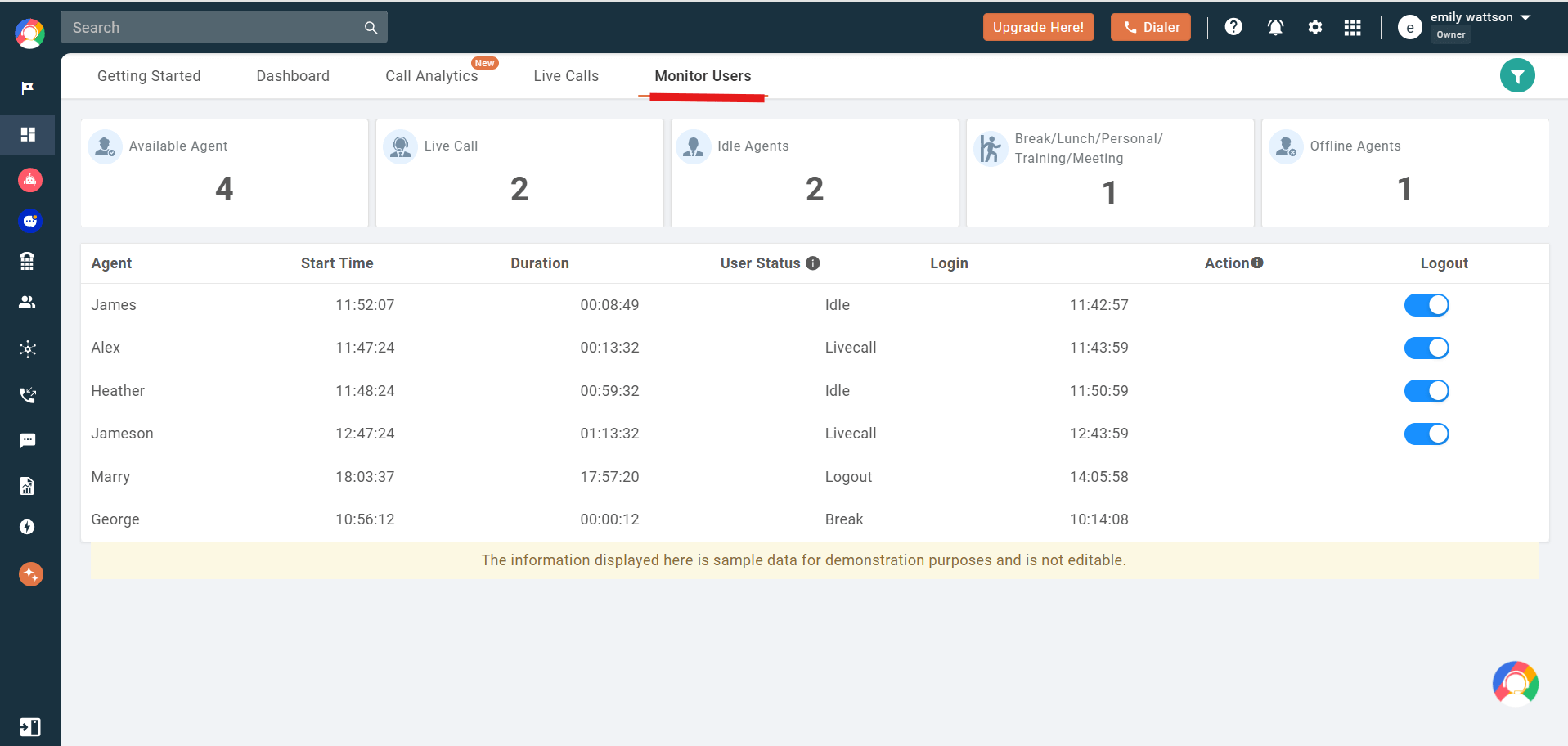
Ooma’s entry and mid-tier plans lack real-time analytics. CallHippo provides dashboards that show live metrics. From active calls to agent status, everything can be tracked in real-time. This level of visibility is essential for making data-backed decisions and improving team output.
A high-quality business phone system also offers real-time monitoring that helps you to stay proactive. As it identifies issues like call spikes, long queues, etc., before they affect customer experience.
5) Faster Onboarding for Startups + Multi-location Teams
CallHippo is an all-in-one platform designed for speed. Teams can easily assign agents, configure workflows, and start calling within minutes. It offers easier onboarding for distributed teams or fast-growing departments.
Training time is minimal. Agents can start using CallHippo instantly across devices. For multi-location businesses, this simplicity is a huge advantage.
6) Supports Global Presence with 150+ Country Numbers
For companies expanding into new regions, CallHippo provides local, virtual, and toll-free numbers across 150+ countries. Ooma’s limited features and international unavailability don’t support global expansion.
With CallHippo, businesses can establish an instant local presence without physical offices. This makes it a powerful choice for businesses that operate internationally.
Quick Comparison: Ooma vs CallHippo
Here’s a quick, side-by-side comparison to help you understand how CallHippo and Ooma differ across the five most important factors for modern businesses.
| Factor | CallHippo | Ooma |
|---|---|---|
CallHippo delivers stronger customization and deeper insights, making it ideal for businesses that rely on data, distributed teams, or high-volume communication. Ooma works well for basic calling needs, but most growing companies eventually need the advanced routing, analytics, and integrations that CallHippo offers out of the box.
How to Choose the Right Ooma Alternative Based on Your Business Type?
Choosing the right phone system depends on how your team works and how fast your business plans to grow. Each type of business has different communication needs. Use the points below to match the right Ooma alternative to your daily workflows and long-term goals.
1. For Startups and Fast-Scaling Teams
Startups grow quickly, so they need a phone system that scales without friction. Look for Ooma alternatives that offer,
- Fast onboarding
- Flexible pricing
- Simple and easy-to-use tools
Cloud-based systems with automation and AI-powered features can help startups streamline communication without adding operational complexity.
Easy integration also helps startups, as they can easily track leads, manage follow-ups, and maintain clear customer data.
2. For Small Businesses (Growing Teams, Basic Support Needs)
Small businesses want stability, predictable pricing, and easy-to-use communication tools. Features like call routing, free calling, interactive voice response (IVR), voicemail, etc., are often enough for daily operations.
Look for solutions that offer these capabilities without needing an upgrade to charging extra. Customer support is also very important for smaller teams that do not have in-house IT resources. Therefore, select a platform that provides responsive support.
- Small businesses can create a checklist based on their team’s daily requirements. For example, if their team needs collaboration tools, they can add them to the list. If they want to automate the current manual workflow, it can also be added to the checklist.
- The checklist can make the shortlisting process easy and can save you from overspending.
3. For Sales & Support Teams
Sales and support teams need advanced call handling and workflow automation. Look for a solution that offers features like,
- Call queues
- Power dialing
- Call transfer
- Call whisper/barging
- Detailed performance dashboards
Integrations are especially valuable for these teams. Tools like HubSpot, Salesforce, Zendesk, or Zoho ensure agents have instant context before answering phone calls.
4. For Remote or Hybrid Teams
Remote teams need a communication platform that works across locations and on multiple devices, that too without performance drops. Key features like call monitoring, team messaging, and shared workspaces help distributed teams collaborate better.
Admin controls are also equally important. Managers should be able to track performance and assign roles from a single dashboard.
5. For Multi-Location or Global Teams
Teams operating globally require a platform that supports,
- International numbers
- Multilingual IVR
- Global routing
Many businesses outgrow Ooma because it provides limited international coverage. Choose a platform that helps you build instant trust among customers worldwide.
6. For Tech-driven or API-heavy Companies
Tech-focused companies need more customization. Therefore, search for a platform that offers open APIs and custom integrations. These essential features help build personalized workflows and automate complex internal processes.
Developers also value platforms with strong documentation and advanced routing logic. If your business relies heavily on automation or custom software, an API-friendly platform will provide long-term flexibility.
Conclusion
Choosing the right alternative to Ooma depends on various factors. From team size to communication needs, each aspect plays a crucial role. As businesses scale, they need stronger routing, deeper analytics, richer integrations, and reliable support.
Features that many Ooma competitors now deliver more effectively. Whether you’re a startup, a global company, or a sales-driven organization, the right platform can improve productivity and customer experience instantly. Evaluate each option thoroughly and choose wisely.
FAQ
1. What makes CallHippo the best Ooma alternative?
CallHippo is the most sought-after alternative to Ooma, owing to its robust features optimized for business. Intelligent call routing, interactive voice menus, unified communications, and powerful analytics give you greater control and understanding of customers. The user-friendly interface makes advanced capabilities easy to manage. And CallHippo integrates with 100+ business apps and is highly customizable.
2. How does CallHippo compare to other Ooma competitors?
CallHippo combines enterprise-grade capabilities with simplicity – easier and more affordable than on-premise solutions. The advanced call handling, customization, and integrations surpass options like Nextiva, RingCentral, and Grasshopper.
3. Can I port from Ooma to CallHippo without disrupting the communications?
Yes, CallHippo makes it easy to port your numbers. The transition plan minimizes any disruption to your communications. CallHippo works closely with you throughout the process. Existing numbers can be ported over in just a few business days. CallHippo provides complimentary support until the port is fully complete. You get guidance from number porting experts dedicated to a smooth transition.
Published : December 1, 2025
Harsh Bairagi is a B2B SaaS content writer with over 4 years of experience in the tech industry. Harsh believes in creating good copies to bridge the gap between tech and emotion. When not chasing clean copy or clever metaphors, he is busy catching up on his favorite sports.

Subscribe to our newsletter & never miss our latest news and promotions.
 24k+ people have already subscribed


