
 Updated : July 20, 2026
Sales teams lose deals to calling rules nobody flagged during the demo.
TCPA, A2P 10DLC, and DNC compliance all surface at legal review. That is when the buying committee asks the hard questions.
The demo that seemed to be going well suddenly starts stalling. And if the questions are not answered satisfactorily, the deal never closes.
This blog is about the calling regulations that quietly kill deals. And how to sort them before the next quarter runs out.
Why Deals Fall Apart After the Demo, Not During It
The buying committee changes shape between the demo and the signature. That change is where deals quietly die.
1. Where This Actually Shows Up
Compliance kills deals at three predictable stages. Contract review, the week before go-live, and mid-rollout. In each stage, a new stakeholder asks a hard question. The review restarts, the rollout stalls, and sometimes the deal collapses.
2. Why Sales Teams Don’t See It Coming
Sales teams build the case with sales-facing stakeholders. VPs of Sales, RevOps leads, and Sales Directors. Once the contract lands, the committee shifts to legal, IT, and compliance. These people never saw the demo. They see the compliance risk instead..
 : Why High-Volume Sales Teams Need More Than One Number
Every Country Has Its Own Compliance Rules
There is no universal rulebook for outbound calling. Every country has its own regulations, and businesses that expand globally must adapt to each one.
1. Consent Documentation (TCPA/DNC in the US)
In the US, businesses need proper customer consent before using auto-dialers or contacting numbers listed on Do Not Call (DNC) registries. Call recording compliance laws also vary by state.
For example, a SaaS company running outbound campaigns without documented consent could face customer complaints, legal penalties, or blocked campaigns even after closing new leads.
2. Country-Specific Outbound Rules (UAE DNCR, India TRAI/DND)
Countries like the UAE and India maintain their own Do Not Call registries. Businesses must check numbers against these lists before launching outbound campaigns.
For example, a company expanding into India that calls customers registered on the TRAI DND list may receive regulatory fines and damage its brand reputation.
3. Number and Sender Registration (A2P 10DLC and Equivalents)
Many countries require businesses to register their phone numbers or messaging senders before running SMS or outbound communication campaigns.
For example, a retailer sending promotional SMS without completing A2P 10DLC registration in the US may see messages filtered by carriers, reducing campaign reach and customer engagement.
: What is Queue Callback? Benefits and Best PracticesWhat it Actually Costs When Compliance Holds Up a Deal
Compliance delays are not just an annoyance. They rewrite the economics of the deal itself.
1. Deals That Reopen After They Looked Closed
A verbal yes gets pulled once compliance surfaces a missing document. Legal asks for a SOC 2 report the sales team never mentioned. Procurement asks about consent handling. The deal that closed on Friday reopens on Monday. The buying committee doubles in size.
2. The Hidden Timeline Cost Between Signature and Go-Live
Even after signature, the number does not go live until compliance clears. A2P registration takes 2 to 4 weeks in the US. Number registration in the UAE takes 3 to 8 weeks. Meanwhile, the call queuing system your team set up cannot receive traffic. The rep hired for that market waits.
Sort Out Compliance Before the Contract Stage, Not After
The fix is not a faster dialer. It is a vendor that has already done the compliance groundwork. The right vendor hands over documentation on request.
1. What to Ask a Vendor Before You Sign
Ask three questions before signature.
- Do you have SOC 2 Type II documentation available today?
- What is your A2P 10DLC registration status for US messaging?
- How do you handle DNC scrubbing and consent capture across our markets?
2. What CallHippo Provides Upfront
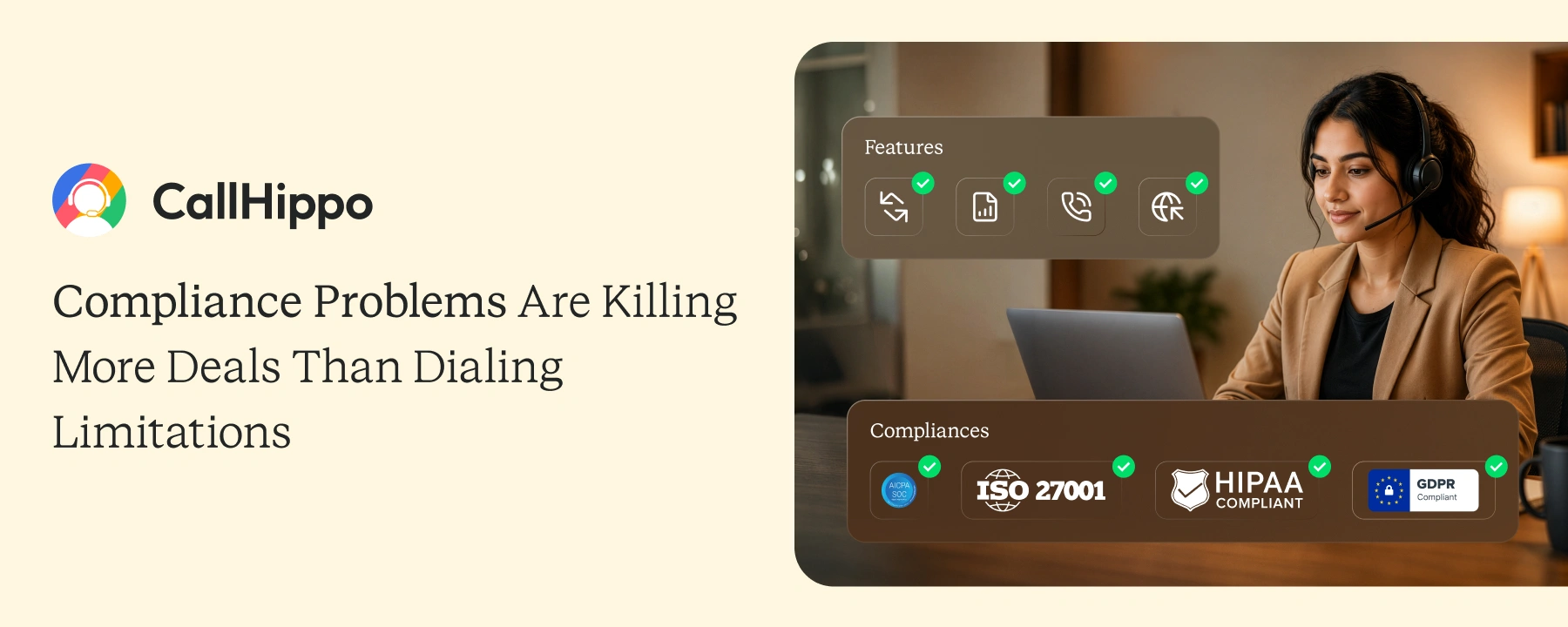
CallHippo publishes its A2P 10DLC registration status on request. SOC 2 Type II documentation is available before contract signature. DNC and consent handling ships as a default, not as an add-on. Every compliance question a legal reviewer asks has an answer prepared.
How to Get Compliance Approved Without Restarting the Deal
Once compliance enters the picture, three moves keep the deal alive.
1. Loop In Legal and Compliance Before Contract, Not After
Bring legal and IT security into the vendor conversation during evaluation, not at contract. Ten minutes early beats three weeks late. The vendor demo becomes the compliance review at the same time.
2. Request Documentation Early
Ask for SOC 2, A2P status, and DNC docs during the demo. If the vendor cannot produce them, that is your answer. Every serious vendor has these ready to send within a business day.
3. What a Fast-Track Compliance Review Looks Like
CallHippo’s security documentation is available for review before the contract stage. A2P 10DLC registration moves in parallel with the sales process, not after. Compliance review compresses from three weeks to three days.
: Calling From the Same Number Every Time is Getting You FlaggedConclusion
Compliance is not the boring end of a phone system contract. It is the stage where deals actually live or die. Sort it out at evaluation, not at signature. The vendor you pick should have every answer ready before you ask.

Frequently Asked Questions
1. What compliance requirements apply to outbound calling in the US?
US outbound calling falls under the TCPA, federal and state DNC registries, and A2P 10DLC for texting. Call recording compliance also varies by state, with 12 states requiring two-party consent.
2. What is A2P 10DLC registration, and why does it delay go-live?
A2P 10DLC is a US carrier registration required for business-to-consumer texting. Registration typically takes 2 to 4 weeks. Traffic gets filtered until it clears.
3. How long does a vendor compliance review usually take?
A full compliance review runs 2 to 6 weeks after contract signature. If the vendor has documentation ready upfront, it compresses to 3 to 5 days.
4. Can a signed phone system deal really fall through over compliance?
Yes, and it happens more than most sales teams realize. Legal or IT can pull a signed agreement if consent handling, SOC 2, or A2P registration cannot be verified.
5. What documentation should I ask a VoIP vendor for before signing?
SOC 2 Type II reports, A2P 10DLC registration status, DNC scrubbing documentation, and consent capture workflow. Get them all before contract signature.
6. Does CallHippo handle A2P and DNC/consent compliance for me?
Yes. CallHippo manages A2P 10DLC registration, DNC scrubbing, and consent capture across supported countries. The compliance documentation ships with the account, not as an add-on.
Published : July 20, 2026

Shantanu Thakur is a Product Consultant at CallHippo with expertise in B2B software sales. With a background in sales development, he brings strong skills in client prospecting, negotiation, and business growth to help companies find the right solutions for their needs.

Subscribe to our newsletter & never miss our latest news and promotions.
 24k+ people have already subscribed