Webinar: The Secret to 2x Call Connect Rates | Register Now.

Close

Upgrade to a Smart Hotel Phone System | Improve Guest Service & ROI

Anant Berge
Author:
green tickUpdated : December 17, 2025

Hotel phones are constantly buzzing, and like most customer-facing industries, hotels must communicate effectively with clients to thrive. In fact, 10% of customers who land on a hotel’s website end up calling the front desk. Unfortunately, 20% of those calls go unanswered.  That’s why they need a robust phone system that forward calls to multiple devices. However, with so many hotel phone system providers in the market, it can be challenging to choose one. So, we bring you our list of the top nine providers you can consider for your hotel business.

What is a Hotel Phone System?

A hotel phone system is a communication network that facilitates seamless communication between the guests and staff of a hotel. Guests and staff go through multiple interactions during a hotel’s daily functioning. Guests might need to book rooms, make restaurant or taxi bookings, or request room service. Staff might need to call guests to provide information or reminders. They must also know which room a guest is calling from to serve them efficiently. Hotel phone systems make the hotel’s overall service more impactful and memorable for guests. All hotels need a high-quality and cost-effective business telephone system regardless of size.

callhippo top 10 company logo
Expert Advice

When selecting a hotel phone system, follow this expert advice. Assess your hotel's needs, prioritize reliability and scalability, consider compatibility and integration, prioritize user-friendly interfaces, evaluate security measures, and compare pricing and support options.

How Hotel Phone Systems Work?

Hotel phone systems connect guests, staff, and departments through one unified communication setup. The goal is simple. Everyone should reach the right person without confusion.

Most hotels use a hotel PBX system or a cloud-based phone system. It routes every call to the correct room or team. When a guest dials a number, the system reads the extension. Then it sends the call to housekeeping, reception, or any specific room.

Modern cloud-based phone systems for hotels work through the internet. They offer clear voice quality and also reduce hardware costs. The staff can use softphones on their devices, which keeps communication smooth even when they move around the property.

How is Hotel Phone System Different From Traditional Phone System?

Modern hotel phone systems are often Private Branch Exchange (PBX) systems. Hotel PBX systems offer functionalities beyond traditional phone systems. They provide more business features than just voice calling and connectivity that traditional phone systems offer. They are another technological business tool for your hospitality business. Here are some differences between the two types of phone systems:

1. Auto Attendant

Hotel PBX phones come with an Auto Attendant or IVR facility. It helps guests look for services more efficiently. They can use the IVR to schedule a massage, set wake-up calls, order room service, or make a reservation. They don’t have to depend on staff availability to obtain these services. Hotels benefit as they can serve guests more efficiently without hiring additional staff.

2. Flexibility

Unlike traditional phone systems, IP-based phones make adding extensions and other tools easy. Hotels can also add or reduce connections easily depending on the season. During the peak tourist season, they can add lines to avoid communication hold-ups at nominal costs. And during the lean season, they can economize by opting for fewer lines.

3. Cost-effectiveness

VoIP hotel phone systems require less investment in hardware and infrastructure than traditional ones, which makes them more cost-effective. Lower investment in communication systems means a healthier bottom line for the hotel. The money saved can be used instead to provide other services to delight guests.

4. Connected hospitality

A cloud-based phone system can ensure that all hotel branches or departments have the same information regarding guests. This can make it easier to anticipate and meet customers’ needs more efficiently, even across geographies. Better service can lead to repeat customers and a higher reputation. Traditional phone systems cannot offer this capability.

Essential Features of a Hotel Phone System

A reliable hotel phone system should feel simple for guests and powerful for your team. It should support your daily operations without slowing anyone down. After working with hotel businesses and studying how modern hospitality tools function, these are the basic features that matter the most:

1. Guest Centric Features

Guests expect quick help from you. So your phone system should make that easy. They should reach the front desk or room service within seconds. Direct dial options help with that because they reduce confusion and improve the guest experience.

If guests step out, voicemail lets them receive important updates without missing anything.
Along with this, the wake-up call feature matters too. It helps guests stay on schedule without calling the front desk each time.

These small touches build trust, and they make the entire stay feel effortless for your guests.

2. Integration Capabilities

Your phone system should work well with the tools that you use already. When it connects with your PMS and billing software, it removes extra manual work. It also lowers the chance of mistakes.

You get updated room status in real time, and your front desk and housekeeping also stay in sync. Hotels that rely on good integrations usually see smoother operations and quicker responses for guests.

3. Staff Collaboration Tools

Your team moves around the hotel property all day. So they need easy ways to stay connected. Internal extensions help departments reach each other without any delay. When your staff has mobile and softphone access, they can stay reachable even when they step away from their desks.

Here, call notes make a big difference. They help your team share quick updates after every call. No one has to repeat information. Everyone sees the same details and can pick up the task without confusion. For example, when a guest raises a request at the reception, the front desk can add a quick note for housekeeping, room service or maintenance. The right team gets the update instantly, and the guest receives help without waiting.

$1

Per User/Month

Keep Your Team Aligned with CallHippo
  • Clear Updates
  • Faster Handovers
  • Zero Confusion
  • Better Guest Service
Experience the power of CallHippo AI

4. Administrative and Management Tools

You need clear visibility into your daily communication. Reports show call volume and peak times, which help you plan better and manage staff more confidently.

Moreover, you can also set permissions and decide which rooms can make outside calls. Along with that, call logs keep billing accurate and transparent. This protects both you and your guests.

Top 8 Hotel Phone System Providers

Now that you know why VoIP hotel phone systems are better than traditional phone systems, let us look at some of the best hospitality phone systems providers.

ProviderPricingFree TrialKey FeaturesKey Strengths
CallHippoStarter: $18
Professional: $30
Ultimate: $42 (approx.)
10 Days Free Trial• Call routing & IVR
• Multi-user dialing
• Call analytics & recordings
• SMS quotas, AI features
• Cloud-based, fast setup
• Scalable per-plan tiers
• Global number coverage
NextivaCore: $15
Engage: $25
Power Suite: $75 (annual billing)
Demo/trial via sales only• Voice, SMS & video
• Team messaging
• Advanced reporting
• CRM integrations
• Unified communications suite
• Scalable feature tiers
• Strong uptime
RingCentralCore: $20
Advanced: $25
Ultra: $35 (annual billing)
15-day free trial (standard)• HD voice & video
• Team messaging
• Auto-attendant & IVR
• Voicemail transcription
• Robust UC platform
• Excellent global reach
• Broad integrations
8×8 (X Series)Starts around $24–32 (est. based on region, quote-based)Varies; often 30-day trial• Unlimited domestic/international calling
• Call queuing & recording
• Analytics dashboard
• Omnichannel support
• Strong in international calling
• Scalable enterprise use
Vonage BusinessMobile: $13.99
Advanced: $27.99
Trial/demo by request• APIs & custom integrations
• Voice AI routing
• Virtual receptionist
• SMS support
• Highly flexible & customizable
• Developer-friendly platform
DialpadStandard: $15
Pro: $25
Enterprise: contact sales
14 days free trial• AI call routing & transcription
• Team chat & SMS
• Web conferencing
• Real-time AI insights
• Simple, intuitive interface
• Strong cross-platform integrations
Phone.comBasic: $12.74
Plus: $18.69
Pro: $27.19 (annual billing)
Free trial varies by invoice plan• Auto-attendant
• Call forwarding & voicemail
• SMS & video conferencing (some tiers)
• Very budget-friendly
• Easy to set up
• Suited for small teams
AircallEstimated starting $30–40 (regions vary); pricing often quote-based7 days free trial (likely)• IVR & call queueing
• Call analytics & coaching
• CRM and helpdesk integrations
• Support-focused (helpdesk/CRM)
• Easy onboarding
• Excellent analytics tools
Ooma OfficeEssentials: $19.95
Pro Plus: $29.95 (user/month)
30 days free trial• Virtual receptionist
• Unlimited US/CA calling
• Voicemail, call logs
• Extension dialing
• Hospitality friendly tools
• Simple hardware availability
• Predictable flat pricing

1. CallHippo

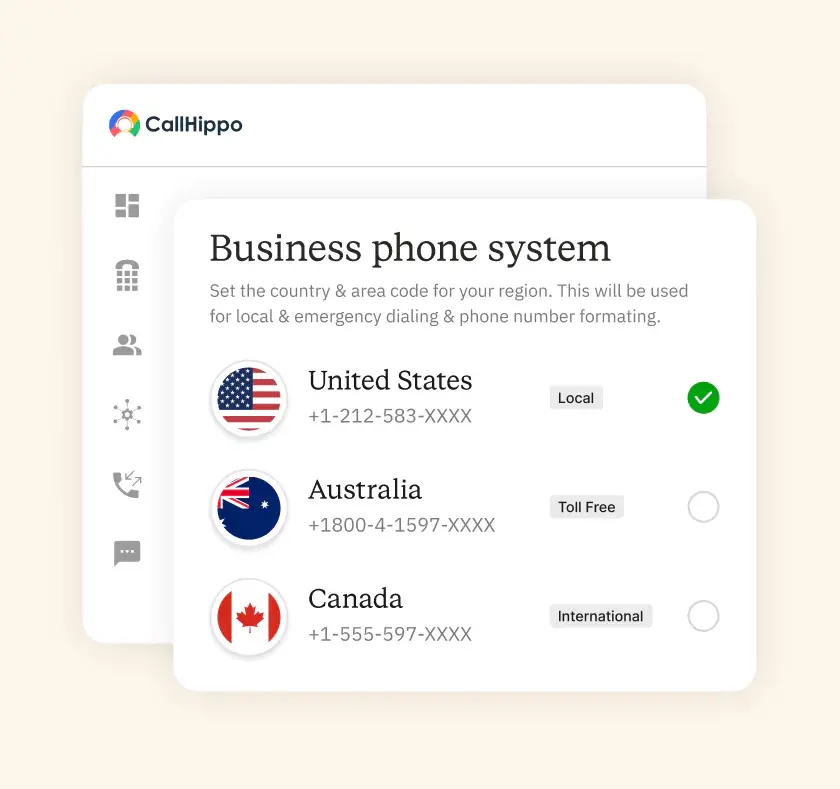
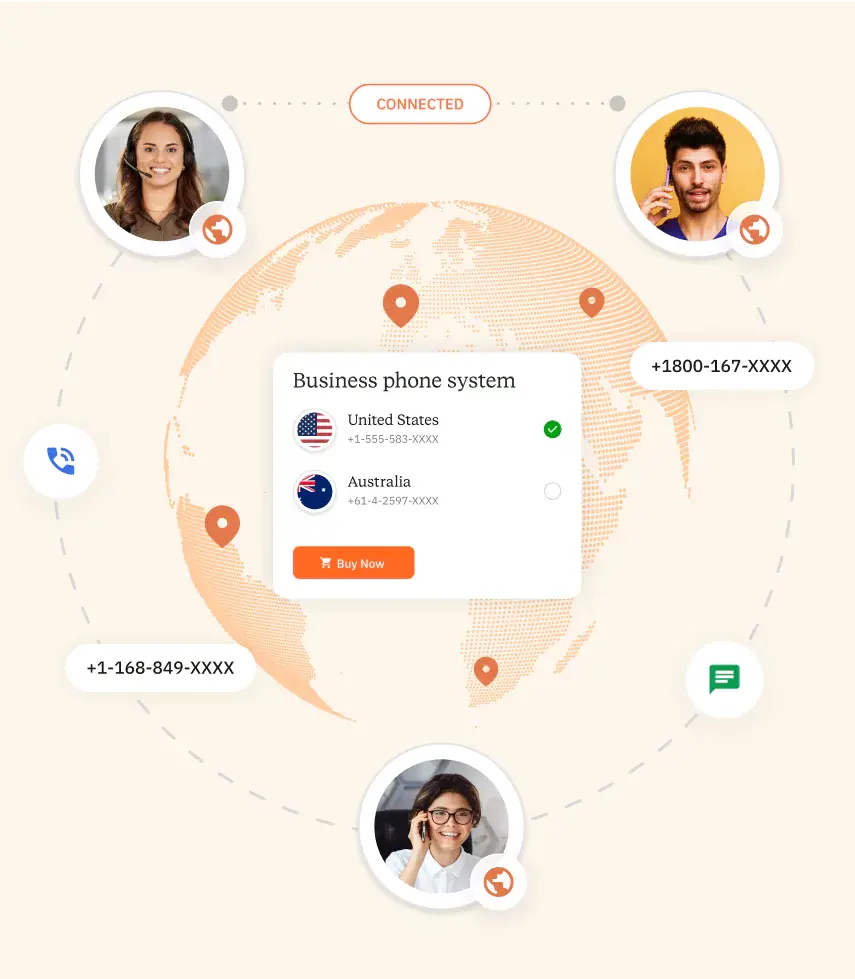
CallHippo is one of the best hotel phone systems that offers a wide range of advanced features and pocket-friendly pricing plans. It provides comprehensive connectivity and flexibility across geographies with 7+ telephony networks and 5+ global servers. It also offers local and toll-free numbers in over 80+ countries and integrates with 100+ third-party integration tools.

Features

  • AI-enabled call routing
  • Multiple PBX technology
  • Smart call forwarding, IVR, call barging
  • integrations with leading CRM solutions
  • Dynamic dashboard and robust analytics
  • Local and toll-free numbers for 50+ countries

Pros

  • It is one of the most cost-effective options in the market, including international calling.
  • Excellent 24/7 customer support helps promptly with all issues.
  • You can install it quickly, and it is also easy to use.

Cons

  • Some more lucrative features are available with the higher-priced plans or must be added separately.
  • The mobile app experience can be improved.

Pricing

CallHippo has three pricing plans for their Office Phone System

  • Basic – $0 Per Month
  • Starter – $18 Per user/Month
  • Professional – $30 Per user/Month
  • Ultimate – $42 Per user/Month

*Pricing as of 10-12-2024.

2. RingCentral MVP

RingCentral MVP is a cloud-based hotel phone system provider that works best for large hotel chains with global locations. It offers many exciting features to hospitality businesses, like voice calls, SMS, MMS, and auto-call recording. It also focuses on improving front desk operations through tools that facilitate, monitor, and analyze team behavior.

Features

  • Voice, message, and video calls, team chat
  • Transition among different devices
  • Integrations with multiple business apps
  • Unified communications

Pros

  • Excellent customer support makes the transition to VoIP smoother.
  • Multiple channels ensure more accessible communication among staff and guests.
  • It offers unlimited online faxing.

Cons

  • Some key business features come at an extra cost.
  • Sometimes, the texting function can glitch.

Pricing

RingCentral MVP offers three pricing plans for customers

  • Core – $20 per user per month, paid annually
  • Advanced – $25 per user per month, paid annually
  • Ultra – $35 per user per month, paid annually

3. Zoom

Zoom is a cloud based video conferencing and collaboration tool that lets hotel teams connect with guests, departments, and external vendors. It works on your desktops and mobile devices, so your staff can stay reachable anywhere in the property. And with its built-in meeting, chat and screen-sharing features, it is a flexible option for guest support and internal communication.

Key Features

  • HD video & screen sharing
  • Team chat and file sharing
  • Meeting recording & automatic transcription
  • Breakout rooms & webinar support
  • AI-driven meeting summaries

Pros

  • It is easy for guests and staff to use, with only minimal training required.
  • Zoom works across devices, so your team stays connected onsite and offsite.
  • It scales well from small meetings to large webinars when needed.

Cons

  • Its free plan has time limits and restricted features for extended use.
  • Some users report speed or quality issues in environments where bandwidth is low.

Pricing

  • Basic: Free
  • Pro: $13.33 per user/month
  • Business: $18.32 per user/month
  • Business Plus: $22.49 per user/month
  • Enterprise: custom pricing

4. Nextiva

Nextiva is a business communication platform with an all-inclusive interface for easy use. It is ideal for large hotels because of its unified and omnichannel communication platform. It also offers a vital function for the hospitality industry – customer feedback collection through customer survey forms.

Features

  • Unified interface
  • Conferencing
  • Live call transfer
  • Multi-level IVR
  • Conversational AI
  • Self-service
  • Integrations with several CRMs
  • Business communication via calls, emails, & texts

Pros

  • It uses NLP cues to help agents assist customers better.
  • Nextiva has very high-quality voice calling.
  • The software contains customer survey features like templates, website embedding, automated surveys, star ratings, etc.

Cons

  • It lacks third-party software integrations
  • New users might find it challenging to learn

Pricing

There are 3 plans with incremental pricing and features from Nextiva

  • Essential – $18.95 per user per month
  • Professional – $22.95 per user per month
  • Enterprise – $32.95 per user per month

5. Ooma

Ooma Office is a simple cloud business phone system that is built for small and medium-sized hotels and teams. In this, you get reliable calling, mobile, and desktop access, and some core features that work out of the box. You don’t need a big IT team to get started. Ooma keeps things simple yet powerful for your hotel’s front desk, guest services, and staff collaboration.

Key Features

  • Virtual receptionist
  • Call recording
  • Voicemail transcription
  • Mobile & desktop app support
  • CRM integrations

Pros

  • The setup process is easy for teams without heavy technical resources.
  • Mobile and desktop apps always keep your staff connected.
  • In some regions, for most plans, it comes with unlimited calling.

Cons

  • Lower-tier plans lack advanced features like video or CRM access.
  • Some users have reported limits in messaging, integrations and features at higher tiers.

Pricing

  • Essentials Plan: $19.95 per user/month
  • Pro Plan: $24.95 per user/month
  • Pro Plus Plan: $29.95 per user/month
  • Enterprise: Custom pricing

6. Vonage

Vonage is a great small hotel phone system, especially for modest-sized hotels looking to scale up fast. It is also equally useful for large hotel chains because of its features. There are 50+ features and integrated solutions, including multiple hotel-specific features. It focuses on supporting collaboration among team members through relevant tools and a unified interface.

Features

  • Integrated channels for video, voice, chat, and SMS communication
  • Call recording, online fax, visual voicemail, etc.
  • Works on both iOS and Android operating systems
  • Integration with Salesforce

Pros

  • It is one of the most cost-effective hotel PBX systems
  • The level of customizability is very high.
  • Plans come with unlimited calling and SMS.

Cons

  • There are additional costs for some hotel-specific features.
  • Integrations with other systems can be challenging.

Pricing

There are three pricing plans in Vonage’s lineup

  • Mobile – $19.99 per month per line
  • Premium – $29.99 per month per line
  • Advanced – $39.99 per month per line

7. Dialpad

An AI-powered hotel phone system, Dialpad offers hospitality businesses all traditional and modern business telephony features. It is capable of handling a large number of clients simultaneously. Being cloud-based, it also gives customers a higher level of location flexibility. Its strict security and encryption also suit hotels of all sizes.

Features

  • Phone, messaging, and video calling
  • Call routing
  • Voicemail transcription
  • Desk phone integration
  • Call barging
  • Integrations with various CRM systems

Pros

  • Its inbuilt AI transcribes calls in real-time, does live sentiment analysis based on calls, and offers Real-Time Assistant pop-up cards if needed.
  • It is easy to set up and use.
  • It works on all devices, giving users high mobility and flexibility.

Cons

  • It has limited desk phone support.
  • The AI transcription’s accuracy can be improved.

Pricing

Dialpad has three pricing plans

  • Standard – $15 per user per month; $23 if billed monthly
  • Pro – $25 per user per month; $35 if billed monthly
  • Enterprise – Price on request

8. 8X8

8×8 is a terrific phone system solution for large hotels or those looking to scale up. It allows efficient AI-supported communication internally as well as externally. Its cloud-based PBX makes this business phone service highly suitable for managing and scaling voice services. As a UCaaS platform, it also offers hotels all communication solutions through a single app.

Features

  • Call forwarding
  • Call flow designer
  • Call recording
  • Transcripts and ring groups
  • Video conferencing
  • Detailed analytics and a convenient dashboard

Pros

  • Multiple subscription models are available, allowing you to pick and choose your preferred mix of features.
  • The program has an onboarding service to help customers figure out their way around its functionalities.
  • You can call 48 countries using unlimited inbound and outbound minutes.

Cons

  • There are no hotel-specific integrations available.
  • The most valuable features can be expensive as they are available only at the highest subscription level.

Pricing

  • 8×8 has two pricing plans for basic business communications
    • X2 – $24 per user per month, billed annually
    • X4 – $44 per user per month, billed annually
  • It has three more plans if you want to add contact center services to the basic business phone system
    • X6 – $85 per user per month
    • X7 – $110 per user per month
    • X8 – $140 per user per month

How to Choose the Right Hotel Phone System?

Several features are crucial to the decision-making process when choosing the right hotel phone system. You can check if the phone system has the following characteristics.

  • Clear sound so that there is no miscommunication when making bookings or placing orders
  • The capability of setting up menu choices by using the phone’s keypad
  • Whether the system’s bandwidth and features match your hotel’s calling or value-add requirements
  • Automated messages or Auto Assistant is available when customers can’t reach an agent
  • Convenience for times when customers have to hold during booking or information checking
  • Business features like call forwarding, call recording, conferencing, and unified communications

4 Main Advantages of VoIP Systems for Hotels

Having a seamless telephone system can give a significant boost to a hotel’s business. And VoIP systems are one of the best options for hotel telephone systems. There are many advantages of using a VoIP System for a hotel. Some of these are:

1. Improved Customer Service

With a VoIP phone system, all your communication tools come into one place. Your staff can make calls and check voicemails. Plus, it can manage tasks without having to switch between different devices. This saves time during busy hours.

2. Streamlined Communication

VoIP systems provide additional features like call conferencing, call recording, etc. You can use it to manage your staff administration and communication effectively. All communication systems are connected, avoiding inaccuracies and confusion.

3. Value Addition

VoIP grows with your hotel. You can add new rooms or staff lines in minutes. There is no need for extra hardware or messy wiring. This makes it pretty easy for you to handle seasonal demand or sudden spikes in bookings.

$1

Per User/Month

Efficiency Today. Easy Growth Tomorrow.
  • One sSystem
  • Zero Hassle
  • Instant Scaling
  • Better Guest Service
Experience the power of CallHippo AI

4. Savings

With VoIP phone systems, automation reduces the cost of routine communication and the effort required by staff. You can save on both cost and time, running your hospitality business with a leaner structure and higher margins.

Real-Life Examples: How Leading Hotels Use VoIP

Hotels of all sizes use VoIP every day to solve real communication challenges. These examples show how flexible the system can be for different types of properties.

1. Boutique Hotel Using VoIP for Multilingual Guests

A boutique hotel often welcomes guests from different countries. With VoIP, the staff can switch between languages using call routing and automated menus. This helps guests get support in a language that they understand.

The team can also use translation tools inside the system. This reduces any confusion and makes each interaction smoother. It also improves guest satisfaction because the communication feels more personal.

For Example:
  • Le Martigny Boutique-Hôtel in Switzerland adopted an IP telephony system, which includes VoIP calls to support multilingual guests. The staff serve visitors across the French, German and Italian borders. The hotel phone system helps them route calls to the right person in the right language.

2. Luxury Resort Automating Housekeeping Updates

Large resorts manage rooms and requests at once. VoIP helps them automate the housekeeping updates so the team always knows which rooms are ready. Staff receive instant alerts on their devices. This keeps everyone aligned during the day.

And supervisors can also track room progress in real time. They can solve delays faster and improve turnaround time. This leads to cleaner rooms and better guest reviews.

For Example:
  • Lenkerhof Hotel & Gourmet Spa in Switzerland upgraded to a unified VoIP platform. Their teams now receive real-time room updates, which helps housekeeping respond faster. The system improved staff mobility and daily coordination across the property.

3. Business Hotel Simplifying Conference Coordination

Business hotels handle meetings and events throughout the week. VoIP helps them connect every team, the front desk, and AV support without delays. Everyone stays updated without moving across the property.

Meeting organizers also get direct numbers to reach hotel support. This keeps conferences running smoothly. It also reduces last-minute confusion that affects guest experience.

For Example:
  • Moxy Hotels, part of Marriott, adopted Avaya’s communication platform to manage guest services and event coordination. Their teams use unified messaging to communicate during conferences, which helps them to respond quickly and keep events on track.

4. Global Hotel Chain Unifying Multiple Properties

Large hotel chains often face challenges when they have separate systems in each location. VoIP helps them to run all properties with one network. Managers can monitor calls, support teams, and share resources across regions. This keeps communication consistent everywhere,

New locations can also join the same setup without extra wiring or a long installation time. This helps the brand maintain the same service quality. Plus, your guests get a familiar experience no matter where they stay.

Security in Hotel VoIP Systems: Protecting Guest Data

Guests share personal details when they book rooms or call your team. So your VoIP system must keep every conversation and record safe. A secure setup builds trust and protects your hotel from data risks.

1. End-to-End Encryption

End-to-end encryption protects every call made through your VoIP system. It turns voice data into unreadable code. Only the sender and receiver can unlock it. This keeps sensitive guest information safe from anyone who tries to access the network.

Modern VoIP providers use strong encryption standards tested in real business environments. These standards reduce the chance of data leaks. They also give your guests confidence that their conversations stay private.

2. Compliance with Data Protection Laws

Hotels must follow data protection laws to safeguard guest details. VoIP systems help by storing call information in secure servers. And these servers follow strict industry rules. Your team can manage data safely without extra steps.

Compliance also reduces legal risks. It shows guests your hotel takes privacy seriously. This builds trust and protects your brand reputation over time. When you use a platform like CallHippo, you also get support for major security standards, which adds an extra layer of confidence for both your staff and your guests.

3. Secure Network Access

Your VoIP system should run on a secure network. This includes tools like strong passwords and controlled access. Only approved devices and staff can use the system. This helps prevent unwanted logins.

Firewalls and regular security checks also play a role. They block threats before they reach your system. This keeps communication smooth and your guest data protected every day.

Final Words

Communication and service are at the heart of a terrific customer experience in the hospitality industry. A good telephone system can be a great tool to ensure both are effective at your hotel. Compare each tool, their features and pros/cons to make an informed decision. You can also try the tools for free to decide if they meet your needs.

FAQs

1. How much does a hotel phone system cost?

Various factors, like the number of users, features, providers, etc., contribute to hotel phone system costs. Most providers offer customized quotes based on these factors. However, on average, a VoIP-based hotel phone system can cost between $20 per user per month to $50 per user per month.

2. What is a PBX receptionist?

A PBX receptionist is a person who handles the calls that require human intervention. Hotel callers sometimes need to talk to a real person instead of an automated receptionist. It could be due to complaints, time-sensitive requests, service requirements outside IVR menu options, etc. The PBX receptionist is needed to service such calls. They might also need to intervene if there are issues with the virtual phone system.

3. What are the features to look out for when choosing a hotel phone system?

Some of the most important features you can look for when choosing hotel phone systems are:

  • Automated messages
  • Auto Assistant or IVR
  • Handling multiple calls at the same time
  • Call holding capability
  • Business features for internal communication

4. What type of phones do hotels use?

Although some hotels still use traditional landline phones, the hospitality industry is increasingly shifting to IP-PBX phones.

5. Why is having a hotel PBX phone system so important?

A PBX phone can help you elevate your customers’ experience via various features. You can ensure more efficient internal and external communication and a more professional impression. A hotel PBX phone system makes the customer journey smoother and the hotel’s operations more agile.

6. Can guests make international calls?

Yes, the guests can make international calls if your hotel allows it. Also, most VoIP hospitality phone systems let you enable or disable this option for each room. You can also set limits or permissions to control costs. If a guest needs this service, your front desk can activate it in seconds.

Explore this content with AI:

Published : December 16, 2025

subscribe image
Let’s Stay in Touch

Subscribe to our newsletter & never miss our latest news and promotions.

people subscribed +24K people have already subscribed
Callhippo Logo
All-in-One Communications Platform Voice, SMS, WhatsApp & AI
  • 100+ integrations
  • AI Assistants 24/7
  • Advance analytics
  • Power-dialer
Start Free Trial
×

CallHippo went an extra mile and suggested a perfect solution. As of now, all of our numbers are clean and have the highest attestation score.

customer

Rostyslav Khanyk

Head Of Sales, Brighterly

Trusted by thousands of leading brands
Seclore - CallHippo
Lalamove - CallHippo
Reports and Data - CallHippo
Market and Market - CallHippo
Valuelabs - CallHippo
Iresearch - CallHippo